



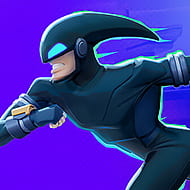
SpeedRunners 2: King of Speed
You round the last bend of the map with a rival’s shadow crawling up the edge of your screen, and you already know what happens if that shadow catches you — the screen keeps scrolling, you don’t, and you’re gone. That single moment of panic, grappling hook already firing toward a blue ceiling ahead, is what SpeedRunners 2: King of Speed is built around. It isn’t really a race in the traditional sense. It’s a fight to stay visible.
| Genre | Competitive platformer / racer |
| Players | Up to 8 online or local |
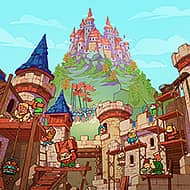
| Setting | New Rush City |
| Core Mechanic | Elimination by falling off-screen |
The Screen Is the Real Opponent in New Rush City
Most racing games clock a finish line. SpeedRunners 2 clocks a camera. Every runner on the track is tethered to the same shared screen, and whoever drifts far enough behind gets swallowed by the edge and eliminated instantly. There’s no comeback lap, no rubber-banding to save you — once you’re off-screen, you’re done for that round. This is the detail that trips up almost everyone in their first hour with the game: you don’t need to be in last place to lose, you just need to be the slowest person on screen at the wrong second.
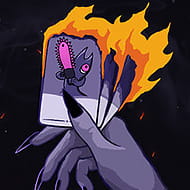
Layered on top of that is the fire. If a race runs long or a runner drops out early, the edges of the play area start filling with flame, squeezing everyone toward the center regardless of skill. It’s a brutal equalizer, and it’s also the mechanic players argue about most in the community — some love how it forces aggression, others think it punishes technical, patient runners who’d otherwise pull ahead legitimately through pure movement mastery.
Learning the rhythm of a track matters more than raw reflexes early on. Booster pads, wall-jump sections, and levers that open or seal off shortcuts are placed with intent, and memorizing them is the actual skill ceiling of the game.
Grappling, Sliding, and the Blue Ceiling Problem
The golden grappling hook is the signature tool of King of Speed, letting you either swing yourself across a gap or yank a rival backward into the danger zone behind you. Both uses matter, and new players almost always default to the first one while ignoring the second, which is usually the difference between eighth place and first.
- Blue-marked ceilings are grapple-only — regular jumps won’t reach them
- Slide-canceling out of a jump preserves momentum through tight corners
- Levers can seal a shortcut behind you, denying a chasing runner
Wall jumping is the other pillar of the movement system, and it’s unforgiving. Miss the timing on a chained wall-jump section and you’ll watch three runners pass while you’re still clawing back up a wall you were supposed to skip past in half a second.
Missiles, Freezing Rays, and Reading the Pack
Pick-ups scattered across each course turn a straight movement contest into something closer to a scramble. A missile fired at the wrong moment can end a run instantly, a freezing ray locks a rival in place long enough for the pack to swallow them, and traps punish anyone who isn’t watching the ground ahead of them. Casual players tend to hoard pick-ups defensively; competitive players in the tournament scene fire them the instant a window opens, because hesitation in this game costs positions, not seconds.
Speedrunning purists and chaos-seekers exist side by side in every lobby, and the game leans into that tension rather than smoothing it over. A private lobby with friends plays almost nothing like a ranked tournament run, and both crowds seem happy with that.
Hothead, Moonraker, and the Cast of New Rush City
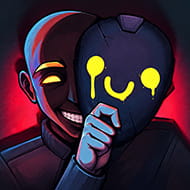
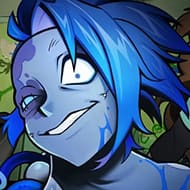
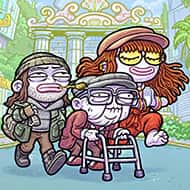
The returning roster gives every match a bit of personality beyond the raw movement systems. Moonraker headlines the current story beats, with Hothead, Cosmonaut Comrade, and Unic rounding out a cast that fans of the original SpeedRunners will recognize immediately. The story campaign frames the Falcon as the returning antagonist, giving structure to what is otherwise a pure arena game.
By the time you reach the later tournament brackets, character choice starts mattering less than execution — the roster isn’t heavily stat-differentiated, so the game rewards route knowledge over pick.
Community Vocabulary Worth Knowing
Players talk about getting “screened,” meaning knocked off the visible play area, and refer to tight wall-jump chains as “the gauntlet” sections of a given map. Tournament regulars also use “hook-yank” to describe pulling a leading runner backward at the worst possible moment.
What the FAQ Doesn’t Always Cover
Why do I keep getting eliminated even when I’m not in last place?
Because elimination is tied to the shared screen, not your rank. If the runner ahead of you speeds up and the camera follows them, you can fall off-screen from second place. Watch the camera edge, not the leaderboard.
Is the 8-player mode different from ranked tournaments?
Yes. The casual 8-Player Mode is looser and forgiving of mistakes, while 64-player tournament brackets run on tighter elimination rules and reward consistent route execution over flashy pick-up plays.
Does the grappling hook work on every ceiling?
No — only ceilings marked blue are grapple-ready. Regular ceiling geometry will just bounce your hook uselessly, which is a common early mistake.
SpeedRunners 2: King of Speed isn’t interested in being fair to whoever’s in front — the fire, the hooks, and the missiles all exist to keep New Rush City chaotic down to the final second, and that’s exactly the pitch that’s kept its community racing back to the same tracks.