




















Spin for PLEASURE










The wheel in Spin for PLEASURE never stops spinning, and that single detail tells you more about the game than its cheerful title does. You’re a contestant on a show that promises pleasure with every spin, and figuring out what that promise is actually hiding turns into the entire puzzle.
The Game Show Premise Behind Spin for PLEASURE
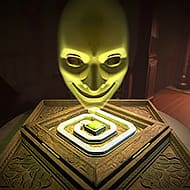
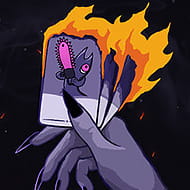
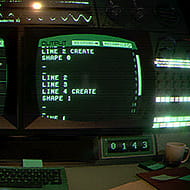
Every scene keeps you locked to one environment and one recurring character — the show’s host, presented as a spinning wheel that talks — which turns out to be a strength rather than a limitation. With nowhere else to look, small details start mattering enormously: a syringe delivering a hit that flashes a specific color sequence, a queen card offered as a choice, a sign on the back of the set that most players never notice on a first attempt.
The dark-comedy tone does a lot of the heavy lifting early on, keeping the horror understated enough that players go in expecting a joke and come out having genuinely solved something. Community reactions consistently mention getting pulled in by the voice acting long before they clock that the show is a puzzle wrapped in a gimmick.
What makes the premise land is restraint. Nothing about the Game Show format gets explained beyond what the host tells you directly, and the game trusts players to piece together why every spin is framed as a reward rather than a risk.
Reading the Syringe Colors and the Hidden Sign
The puzzle at the center of Spin for PLEASURE isn’t announced as a puzzle, which is exactly why so many first-time players miss it. Every syringe hit flashes the same fixed color order — purple, then blue, then green — and that consistency is the clue, not the randomness players initially assume it to be. Some players spend their entire first run hunting for meaning in the wrong pattern, like the order outcomes arrive in, before realizing the syringe colors were the fixed signal all along.
Spotting the maintenance sign tucked on the back of the set is the other half of solving it, and it’s easy to miss entirely if you’re focused on the host rather than the environment around them. Between the syringe sequence and that sign, the game gives you everything you need to reach a real solution rather than a random guess.
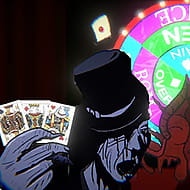
Selecting the queen card at the right moment, and steering the final choice toward what the community refers to as the Always Character Kittens outcome, is the payoff for players who actually connected those clues instead of clicking through on instinct.
Multiple Endings and Why the Puzzle Surprises First-Timers
Spin for PLEASURE runs short, short enough that plenty of first-time players assume they’ve hit the end before realizing there’s a puzzle layer underneath the surface story at all. That’s a divisive design choice on its own — some players love how the brevity forces every clue to matter, others feel like the true ending is too easy to walk past without ever noticing it existed.
Multiple endings branch from how well you’ve actually read the syringe pattern and the hidden sign rather than from arbitrary dialogue choices, which is part of why players who solved it organically describe the moment as more satisfying than most puzzle games manage in far longer runtimes.
What is the significance of the syringe colors?
The syringe always flashes purple, blue, and green in the same fixed order, and that consistency is the actual clue toward the game’s real puzzle rather than a cosmetic detail. Players who track this sequence rather than other in-game randomness are the ones who find the intended solution.
How do I find the true ending in Spin for PLEASURE?
Reaching it means noticing the maintenance sign on the back of the set, correctly reading the fixed syringe color order, and picking the queen card at the right point before steering the finale toward the Always Character Kittens outcome. Missing any one of those pieces tends to route players toward a shorter, less complete ending.
Underneath the bright colors and game-show patter, Spin for PLEASURE rewards exactly the kind of attention its host keeps distracting you from — notice the syringe, notice the sign, and the wheel stops feeling random the moment you realize it never was.