
















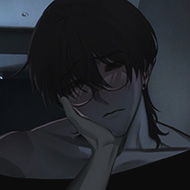
Survive Min








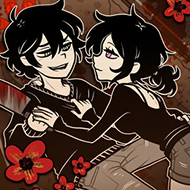



In Survive Min you start with nothing but a chair, a closed door, and Min sitting close enough that his attention feels physical, and that opening condition matters because it never really changes — the whole game happens in one room. Created by developer @FATHER and originally released on itch.io, this yandere horror visual novel became a viral hit for stripping horror down to a single unbroken conversation.
| Genre | Psychological horror visual novel |
| Developer | @FATHER |
| Endings | 9 |
| Core Mechanic | Dialogue choice |
Why There’s No Combat, No Inventory, No Exit
Survive Min deliberately removes every standard horror toolkit. There’s no weapon to find, no door to unlock, no map to explore. The only resource is your ability to read Min’s tone and choose a response that doesn’t tip him toward one of his darker moods.
That absence of mechanical complexity is exactly why the game works — every choice carries weight because there’s nothing else to distract from it. A polite answer can read as fear. A brave one can read as an invitation. Neither is guaranteed safe.
Reading Min’s Shifting Moods
Community discussion around Survive Min circles constantly around Min’s unpredictability — he’s playful, affectionate, and capable of turning murderous over what looks like nothing. Players describe him as “consistently inconsistent,” a phrase that’s become something of a community catchphrase for the character’s core design.
One specific beat players keep bringing up is the moment fans nicknamed the “kyay zu” sequence, a sudden tonal break that catches almost every first-time player off guard regardless of how carefully they’ve been reading the room.
Nine Endings and the Value of Replaying
With nine documented endings, several of them abrupt death scenes, Survive Min is built around replay. Once you know how one conversation ends, the natural next question becomes what a kinder, colder, or more honest version of the same exchange would trigger instead.
Playing It the Way It’s Meant to Be Played
Headphones and a dark room aren’t just flavor advice — the game’s tension depends heavily on audio cues and pacing between lines. Rushing through dialogue by spam-clicking is the single most common way new players undercut their own experience.
Why does Survive Min feel scarier without jumpscares? Because the horror is built on proximity and interpretation rather than surprise, so the dread comes from silence and pacing instead of loud stingers.
What is the “kyay zu” moment in Survive Min? It’s a community-coined name for a specific unpredictable beat that catches most first-time players off guard, contributing heavily to the game’s reputation for tonal whiplash.
How many endings does Survive Min actually have? Nine, including several abrupt deaths, which is the main reason players return for multiple playthroughs after their first ending.
Survive Min succeeds by trusting its premise completely: one room, one presence, and a player who has to decide, line by line, whether Min is being sincere. As a first Ren’Py project from a self-taught developer, Survive Min proves that horror doesn’t need scale — it just needs Min watching a little too closely.