









The Ruins of Calaworm


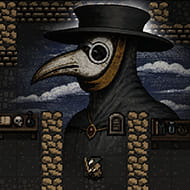
The Ruins of Calaworm looks like a cozy retro pixel-art dungeon crawler on the store page, but it plays like a system built to punish anyone who clicks without thinking first. This isn’t a cozy game, and the developer says as much outright — every tile you step onto can be a trap, a puzzle piece, or a one-way ticket into territory you’re not ready for.
| Genre | Turn-based Dungeon Crawler |
| Platform | Windows |
| Core Mechanic | Tile-based turn movement with resource management and cosmic horror puzzle systems |
Turn-Based Movement and Why Careless Steps Matter
Every action in The Ruins of Calaworm happens on a turn, which sounds forgiving until you realize enemies move on your turn too. Dead players can no longer engage enemies that wander into range during the same turn they died, which tells you exactly how granular the turn resolution actually is — this is a game where the order operations happen in matters as much as the operations themselves. Beginners tend to treat movement casually early on, only to get blindsided the first time a Cultist mutates nearby because they wandered too close to the wrong Statue.
The game rewards reading a room before committing to a path through it, and that habit becomes essential once Deep Ones start appearing in later Regions.
Cultists, Deep Ones, and the Cosmic Horror Roster
With over twenty enemies spread across five distinct tilesets, the bestiary leans hard into Lovecraftian cosmic horror rather than generic dungeon monsters. Cultists and Deep Ones both interact with Statues scattered through the Ruins — Cultists mutate near them, Deep Ones heal near them — which means the terrain itself becomes part of the combat calculus rather than just scenery. Players who ignore Statue placement tend to get punished by enemies that are stronger than their stats alone would suggest.
Shrines, Artifacts, and the Align the Stars Puzzle
Shrines are scattered throughout the Ruins and tie into Artifact collection, which in turn feeds into the game’s puzzle systems. One recurring puzzle type, referred to by the community and even in patch notes as the Align the Stars puzzle, ties directly into Shrine interaction and has been tweaked more than once after players reported visual bugs interrupting the sparkle effect mid-solve. It’s a small detail, but it’s the kind of thing longtime players bring up when comparing patch versions, since it shows how much attention goes into even the ambient feedback around puzzle-solving.
Early Shrines sometimes display a confusing “no Artifacts” message when players try to leave without interacting properly — a known rough edge the developer has acknowledged rather than hidden from the community.
Crystal Shards, Corruption, and Currency Pressure
Crystal Shards function as the game’s currency, dropped by monsters and Bosses alike, and the drop math has been sensitive enough that a past patch had to fix Shard values overflowing into negative numbers at higher Region tiers. Corruption is a separate mechanic entirely — one the developer has openly stated wouldn’t work with simplified mouse controls, which is part of why the control scheme stays keyboard-focused even late in development. Corruption in particular functions as a pressure system that punishes lingering in dangerous Regions too long, pushing players toward efficient, decisive play rather than cautious over-exploration.
Covenant mechanics add another wrinkle: killing Bosses tied to the same Covenant now mainly affects service costs and cancels Binding, a change made specifically to streamline consequences that used to ripple further than the developer wanted.
Kicks, Keys, and Doors You Lock Yourself Out Of
Kicks — a forceful way of dealing with doors — only unlock after you’ve opened a door with a Key or accidentally closed one on yourself, which is a deliberately unusual gating choice. It means the game occasionally teaches you a tool by first letting you experience the problem it solves. Doors locked by accident now always give players a fair chance to force them open, a tweak that came directly from player frustration with earlier versions where a mistimed door closure could feel like a dead end.
One-Way Passages, Teleport Traps, and Secret Walls
The exploration layer is built around traps that actively work against careless backtracking. Teleport Traps and one-way passages can catapult you into unexplored territory with no way back except forward, and Secret Walls hide optional paths that reward players willing to interact with suspicious-looking tile edges instead of rushing past them. Arcane Barriers add another layer, requiring specific triggers — including Arcane Resonance, which repositions the player back to their prior tile once activated — to bypass safely.
Once you reach later Regions, these systems stack on top of each other, and the puzzly exploration the developer has emphasized becomes the main challenge rather than combat itself. Long-time players who followed the game since its earlier prototype under a different working title still bring up how much more forgiving the current version feels, even while insisting it still isn’t a cozy game by any stretch.
The Map Editor and Building Your Own Ruins
Beyond the main campaign, The Ruins of Calaworm ships with an editor that lets players build their own maps using the same tilesets and mechanics as the core game. It’s a feature aimed squarely at the crowd that finishes the main content and wants to keep experimenting with Statue placement, trap layouts, and Shrine puzzles on their own terms, and it’s become a quiet but consistent talking point in the itch.io comment section from players sharing what they’ve built.
The Ruins of Calaworm asks more of players than its retro pixel-art shell suggests, and that gap between first impression and actual difficulty is exactly what keeps its small community arguing about Corruption, Covenant mechanics, and the fairness of its traps. Between the Align the Stars puzzle and the ever-present threat of a Deep One healing near a Statue you forgot about, this is a game that punishes assumptions — and rewards the players willing to read every tile before stepping on it.