
















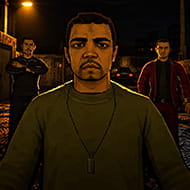




The Somnolent Prince
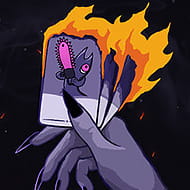
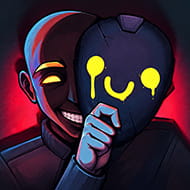



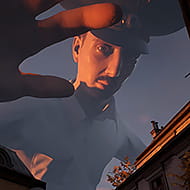


What happens to a story when you already know how it’s supposed to end, and the game hands you a version where that ending isn’t guaranteed? That’s the question The Somnolent Prince keeps circling. Built as a standalone Persona 5 Royal fangame centered on Ren and Goro Akechi, it takes a relationship long debated in the community and gives it room to breathe — and then, depending on your choices, room to break.
A Standalone Story Built From Familiar Roots
You don’t need deep familiarity with the source material to follow The Somnolent Prince, but the game rewards it. Fans of the original relationship — known in the community by its ship name, Shuake — will recognize the emotional shorthand baked into early scenes, while newcomers get a self-contained arc that doesn’t lean on outside context to land its punches.
Where the fangame diverges most from its source is pacing. The base material spreads Ren and Akechi’s dynamic across dozens of hours interwoven with unrelated systems and side content; The Somnolent Prince strips that away entirely, compressing the emotional arc into a tighter, dialogue-first format where nothing exists to pad runtime. Every scene is doing relationship work.
That compression is exactly what divides opinion. Some players find it a stronger, more focused version of the dynamic than the source ever allowed room for. Others miss the slower build the longer format provided, arguing the fangame’s twist lands harder but earns it faster than some would like.
Ren and Akechi Written With Deliberate Restraint
Community discussion around The Somnolent Prince keeps returning to characterization — specifically, how carefully both leads are written to avoid flattening either of them into a single trait. Akechi in particular gets singled out for retaining his contradictions rather than being softened into a straightforwardly sympathetic love interest.
Ren, meanwhile, carries most of the game’s structural twist. Without spoiling specifics, players consistently describe the moment his fuller motivations surface as a turning point that recontextualizes earlier “sweet” scenes on replay, similar to how Escape Line’s later chapters reframe its own early romance beats.
The writing leans on quiet, near-ominous pacing rather than jump scares, with music doing a lot of the atmospheric lifting during scenes where dialogue intentionally goes sparse.
Multiple Endings and the Star Ending Players Chase
The Somnolent Prince branches into several distinct endings, and the one most frequently discussed in comment threads is the star ending — widely described by players as the emotionally rawest of the available outcomes, arrived at only after a specific pattern of trust-building choices across the mid and late game.
- Early chapters set the emotional baseline — choices here determine how much Akechi is willing to let his guard down later
- The mid-game twist involving Ren functions as a soft gate; how you react in that scene narrows which endings remain reachable
- Late-game dialogue determines whether the star ending or one of the alternate closures triggers, with little warning before the branch point
Reaching the star ending on a first attempt without guidance is uncommon. Most players report needing at least one additional pass through the mid-game twist scene to understand which responses the game is actually tracking, since the branching logic isn’t telegraphed the way more traditional visual novels signal their choice weight.
What Makes This Fangame Worth the Detour
Voice work isn’t part of the package here — this is a text-and-CG visual novel through and through — but the character writing carries scenes that would otherwise depend on delivery. That’s a real limitation for players who came in expecting something closer to the fully voiced original.
The art direction draws consistent praise, particularly for how it handles the tonal shift between the game’s earlier, warmer scenes and its increasingly unsettling back half. Reviewers who’ve played through more than one ending note that background art choices during pivotal scenes are rarely accidental once you notice the pattern on replay.
One recurring piece of community vocabulary worth knowing going in: players refer to bonus behind-the-scenes content, unlocked through optional support, as a way to see how specific scenes were drafted before final revisions — useful context for anyone curious how the star ending’s twist was originally structured.
Questions Newcomers Keep Asking
- Do I need to have finished Persona 5 Royal first? No — The Somnolent Prince is written to function as a standalone story, though familiarity with Ren and Akechi’s dynamic in the base game adds emotional weight to early scenes.
- How many endings does the game have? Multiple distinct closures exist, with the star ending generally regarded by the community as the most difficult to reach and the most talked-about once players find it.
- Is the game finished, or still in development? It has received post-release patches, including small dialogue fixes near the ending, suggesting ongoing support rather than a one-and-done release.
The Somnolent Prince works because it trusts its audience to sit with discomfort instead of resolving it quickly, using Ren and Akechi’s established chemistry as a foundation rather than a shortcut. Whether you land on the star ending or one of its harsher alternatives, the game makes sure you feel every choice that got you there.