

















Therapy with Dr. Albert Krueger




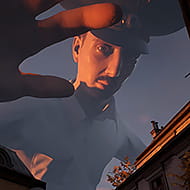
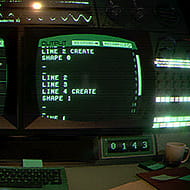
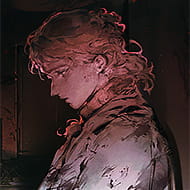

You sit down across from a man who smiles a little too wide and says he’s already reviewed your file. That’s how most sessions of Therapy with Dr. Albert Krueger begin — not with a jump scare, but with a chair, a desk, and a therapist who never stops being pleasant even when everything about the room feels wrong.
| Genre | Horror visual novel, point-and-click |
| Playtime | Roughly 20 minutes per playthrough |
| Setting | A single therapy office in the G2 district |
| Main NPC | Dr. Albert Gerald Krueger |
Who Taylor Lee Is Dealing With
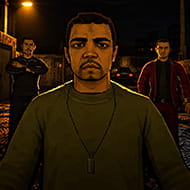
The player controls Taylor Lee, a patient who wakes up already mid-appointment with Dr. Krueger, head of the Krueger Health Solutions Corporation and self-styled inventor of “Dream Therapy.” Krueger’s PhD is technically in Marine Biology, a detail the community treats as one of the game’s better running jokes, since he never once uses it in the session. He asks Taylor a string of questions, some ordinary and some clearly designed to unsettle, and the way you answer decides which of the three endings you land on.
What makes Krueger effective as a horror figure isn’t gore. It’s the mismatch between his tone and his intentions. He stays composed and courteous through nearly the entire game, and that composure is the thing players describe as most disturbing in retrospect. There’s exactly one moment where the mask slips, when Taylor spots a sketch of a character named Vincent among Krueger’s belongings, and Krueger’s reaction to being caught is the closest thing the game has to a real jump scare.
Newer players tend to treat the early questions like small talk and get caught off guard when the tone shifts. That instinct to relax makes sense, since the pacing genuinely does start slow, but by the time the Rorschach segment appears, the game has already stopped being gentle.
The Three Mini-Games Inside the Session
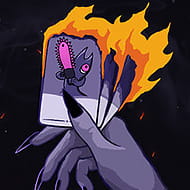
Dream Therapy is delivered through three embedded mini-games: a math and Cups & Balls sequence, a segment called Gateway to Your Heart where you’re instructed to keep your eyes shut, and a Rorschach inkblot test where flipping the cards is technically possible but not advised. Each one is short, but they’re the actual skill check in a game that otherwise looks like pure dialogue.
- Score every answer correctly in the math and Cups & Balls round for the best-ending path
- Keep your eyes closed for the full duration of Gateway to Your Heart
- Avoid flipping any of the inkblot cards during the Rorschach segment
Completionists who want to see all three outcomes usually replay with the opposite instinct on the second run — answering wrong on purpose, peeking during Gateway to Your Heart, flipping cards during the Rorschach test — since the bad endings require the inverse behavior of the good one. Story-focused players, meanwhile, often only care about triggering the Vincent sketch moment, since it’s the strongest tie to the wider Krueger universe.
Endings, Saves, and What They Change
There’s no save option available until your second playthrough, and once you reach the good ending, the save point resets, forcing a fresh run if you want to see it again. That restriction annoys some players and is one of the more debated design choices in Therapy with Dr. Albert Krueger, since it turns a short game into something you’re nudged to replay from scratch rather than reload.
Community members who frequent the fan wiki and TV Tropes page tend to shorten the title to TWDAK in conversation, and they’ll often mention that the game shares continuity with Vincent: The Secret of Myers, made by the same developer. Whether you notice that connection on a first run depends entirely on whether you find the sketch.
Is Therapy with Dr. Albert Krueger connected to another game?
Yes. It shares a universe with Vincent: The Secret of Myers, from the same developer, and the link is discovered in-game through a drawing of a character named Vincent in Krueger’s office.
How do you get the good ending?
You need a clean run through all three tests: correct answers in the math and Cups & Balls section, eyes shut for all of Gateway to Your Heart, and no flipped cards during the Rorschach segment.
Why doesn’t the game let me save right away?
Save access only unlocks on a second playthrough, and it’s removed again once the good ending is reached, which is a deliberate pacing choice tied to how the game wants you to experience Krueger’s control over the session.
Therapy with Dr. Albert Krueger works because it never needs a hallway full of monsters to feel dangerous — one man, one desk, and three quiet tests are enough, and the moment Krueger’s sketch of Vincent surfaces is the point where most players stop trusting him completely.