















Traks









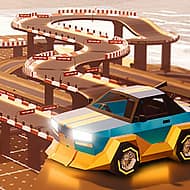
Traks looks, at a glance, like a simple low-poly arcade racer with cute blocky cars — the kind of thing you’d expect to finish exploring within an hour. Play it for more than a few laps, though, and it plays like a physics sandbox wearing a racing game’s clothes, built around a track editor detailed enough that plenty of the community spends more time building circuits than actually racing them.
| Genre | Racing, simulation |
| Platform | Windows, VR supported |
| Status | In development, free demo on Steam and itch.io |
| Core system | Chaos Vehicles physics on Unreal Engine 5 |
| Track editor | Block-based, with text-message track sharing |
The Physics Foundation Underneath Traks
Built on Unreal Engine 5’s Chaos Vehicles system, Traks aims for handling that rewards deliberate drifting rather than simple point-and-throttle racing. Recent updates specifically targeted more responsive physics and improved lighting, and returning players have noticed the handling shift noticeably between demo versions, sometimes enough to make old muscle memory from an earlier build feel wrong on the newer one. This is still very much an alpha-stage demo, and the developer has been upfront that physics tuning is ongoing rather than finished.
Beginners usually approach Traks the way they’d approach any arcade racer, hammering the throttle through corners, and get punished by a chassis that genuinely reacts to weight transfer and surface angle. Once you start braking earlier and easing into drift rather than forcing it, lap times improve fast, which is part of why the drift-focused crowd has latched onto the game specifically for that learning curve.
Building With the Track Editor
The block-based editor is arguably Traks’ biggest draw beyond racing itself, letting players assemble custom circuits piece by piece and then share them using a simple text-message code system rather than uploading full files. That sharing method keeps custom tracks lightweight and easy to pass around on forums and Discord servers, and it’s become one of the more talked-about quality-of-life features in player discussions. The developer has steadily expanded the available building blocks across updates, and community-made tracks already range from tight technical courses to sprawling stunt layouts.
- Casual racers mostly stick to the built-in demo tracks and global leaderboard chasing
- Editor enthusiasts spend most of their time in the track builder rather than racing laps
- VR players specifically seek out Traks for the first-person driving feel the headset support adds
VR Support and Multiplayer Direction
VR support arrived as a dedicated update, giving Traks an added dimension for players who want to feel corner apexes rather than just judge them on a flat screen. It’s a feature that a lowpoly racer this early in development didn’t strictly need to include, which is part of why it stood out to the itch.io community when it landed. Multiplayer is tagged as part of the long-term direction as well, though the current demo build centers mainly on solo time trials against the global leaderboard.
One thing players consistently flag as still rough is vehicle collision feedback in tighter multi-car scenarios, an honest weak point the developer has acknowledged is still being worked on rather than something hidden from the community. It’s the kind of transparency that has kept the itch.io comment section largely constructive even while pointing out real issues.
What Long-Tail Traks Questions Actually Ask
Players searching for Traks tend to want to know three things above everything else: whether the game currently supports VR (it does, as of a dedicated update), whether custom tracks can be shared without files (yes, through the text-message code system built into the editor), and whether the physics are final (they are not — the developer continues tuning handling response with nearly every update, most recently focused on making drifts feel more controllable).
Drift tuning: the amount of grip loss during a slide has been adjusted multiple times across demo versions, and players who learned an earlier build often need to relearn braking points after an update.
Traks is still assembling itself in public, update by update, but the foundation — Chaos Vehicles physics paired with a genuinely capable block editor — already gives it more depth than its lowpoly art style suggests. Anyone who builds a track, shares the code, and watches someone else nail a drift through a corner they designed understands immediately why the editor side of the community has grown as fast as it has.