
























Witchspire
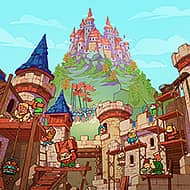






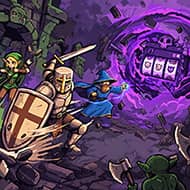



Witchspire drops you into a hand-crafted magical land with nothing but a wand, an empty patch of ground, and a stack of fellow arcane alumni who scattered somewhere out there after arriving with you. Chopping the first tree feels almost identical to a dozen other survival games, right up until a familiar appears and the whole thing starts feeling like something else entirely.
| Genre | Co-op survival crafting |
| Playable Role | Witch or wizard |
| Core Loop | Crafting, base building, familiar taming |
| Familiars Available | Around 30 |
Tracking Down Your Arcane Alumni
The framing story in Witchspire is simple on purpose: you and your classmates ended up scattered across a magical land, and finding them again is the loose thread pulling you through early exploration. New players tend to treat this as a checklist, but the real pull is what happens along the way — a familiar getting curious about your campfire, a corrupted patch of land you weren’t expecting to stumble into. Once corruption starts spreading near a region you thought you’d already cleared, that early wandering stops feeling casual and starts feeling like you’re racing something.
Base building anchors a lot of that early momentum. Rather than fighting terrain the way a lot of survival games force you to, you can levitate freely while placing walls and roofs, which removes the usual scaffolding busywork almost entirely. Builders in the community consistently name this as the mechanic that hooked them, and it’s easy to see why — placing a roof over an awkward, sloped patch of ground takes seconds instead of the usual dirt-tower workaround players are used to in genre neighbors like Valheim or Palworld.
Furniture options are still limited during Early Access, and cottage decorators say so openly in Steam discussions — it’s one of the more common criticisms, even from players who otherwise love the loop. The building system itself gets universal praise, but the catalog of couches, lamps, and carpets to fill a finished house with hasn’t caught up to how quickly players can now shape a home’s exterior, which is a fair trade-off for a game still early in its development cycle.
Wands, Spells, and Combat in Witchspire
Instead of guns, you’re finding wands and casting spells bound to your mouse buttons, and the dodge combined with generous double-jumping gives combat a floatier, more mobile feel than most survival-crafting hybrids attempt. Slain familiars drop orbs that sometimes let you attune to them, with certain crafted items improving those odds, turning an ordinary skirmish into a gamble on whether you’ll walk away with a new teammate.
Combat-focused players tend to prioritize wand upgrades early, while builders lean harder into the crafting side before engaging fights at all — Witchspire doesn’t force either approach, which is part of why the split shows up so clearly in community guides. A third group, familiar collectors chasing specific creatures for their base, will often deliberately provoke fights they’d otherwise avoid just to roll the dice on an orb drop.
The magic theming extends past wands too — swords and spells found in the world each carry their own bound properties rather than reused stat blocks, so two players running similar builds can still end up with noticeably different left-click and right-click loadouts by the time they’ve explored a handful of regions.
Taming and Bonding With Familiars
- Witchspire skips throwable capture items entirely, so taming happens only through combat followed by orb attunement, which means every capture attempt carries real risk instead of being a guaranteed toss-and-catch.
- Each familiar has a distinct personality rather than reused animations, which means the creature that spent a fight biting at your ankles can end up being the one you get genuinely attached to an hour later.
- Roughly 30 familiars are available during Early Access, with more planned, so players chasing a complete collection are working toward a moving target rather than a finished list.
This is where a lot of players say Witchspire earns its comparisons to creature collectors while still feeling handmade rather than generic. One familiar that starts a fight against you can end up becoming a favorite teammate an hour later, which is a strange but consistently reported experience across early reviews and Steam Community guides.
Solo players get the same familiar system as co-op groups, since taming and attunement aren’t gated behind multiplayer, though players running with friends tend to divide roles naturally — one person baiting a familiar into a fight while another lines up the finishing blow that triggers the attunement chance. Community shorthand for a particularly stubborn familiar that refuses to attune after several tries has already started circulating in the game’s Steam guides, a small sign of how quickly this system has built its own vocabulary.
Does Witchspire have Palworld-style capture mechanics?
No — Witchspire deliberately skips throwable capture items in favor of orb attunement after combat, which sidesteps the controversy some competitors in the genre have faced. Reviewers have specifically called this out as one of the game’s more thoughtful design choices rather than a simple reskin of an existing formula.
How many familiars can you collect right now?
Around 30 are available during the current Early Access build, a number players expect to grow as the developers roll out planned content updates. That’s a modest roster compared to some creature collectors, but each one is handcrafted rather than palette-swapped, which is why the number hasn’t drawn much complaint so far.
Is Witchspire playable solo or does it require co-op?
Both are supported — the game is built around co-op play with friends, but the crafting, exploration, and familiar systems all function in solo sessions too. Base building in particular loses none of its depth when played alone, since the levitation tools don’t depend on having a second player around to help.
Between the levitating build tools, an ever-growing roster of familiars, and an ancient darkness that’s clearly meant to escalate as Early Access continues, Witchspire makes chopping that first tree feel like the start of something worth returning to rather than another checklist to clear.