





















Woo Woo
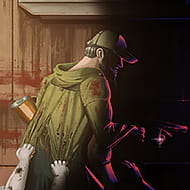









You’ve got twenty minutes left on the clock, a broom in your hand, and a spider-legged trash bag skittering across the kitchen floor toward the one exit you need clear. This is the kind of moment Woo Woo keeps handing you, over and over, until you either learn to work around it or Dad finishes what he started. The premise is simple to state and brutal to execute: clean the house before midnight, or become the next meal.
| Genre | Roguelike, Action, Puzzle |
| Platform | Browser (HTML5) |
| Average session | About half an hour |
| Core loop | Clean procedurally generated rooms before the midnight deadline |
What the Midnight Deadline Actually Demands
Every run of Woo Woo starts the same way and ends differently, because the house layout is procedurally generated each time you boot it up. That means you can’t memorize a route the way you might in a fixed-map cleaning sim. You learn the logic of the chores instead — sweep this, mop that, drag the escaped trash back to where it belongs — and adapt the order on the fly depending on what the generator hands you.
The tension comes from a simple fact: chores take time, and time is the one resource you can’t refill. Beginners tend to treat each room like its own puzzle to solve perfectly, polishing every corner before moving on. That’s a losing habit here. The game rewards triage, not perfectionism, and the players who last past their first few attempts are usually the ones who accept a slightly messy room in exchange for banking extra minutes.
By the time you reach the basement, where a giant centipede patrols the dark, the pressure compounds. You’re not just racing the clock anymore — you’re racing it while avoiding a creature that punishes careless pathing. Woo Woo doesn’t explain this shift; it just happens, and the first time it does tends to be the moment new players realize this game has more bite than its pastel art style suggests.
Reading the Trash That Runs on Spider Legs
One of the more talked-about details in Woo Woo is the trash itself, which doesn’t sit still waiting to be bagged. It sprouts thin spider legs and scuttles away from you, sometimes toward corners, sometimes toward doorways you’re trying to keep clear. Players on the game’s Discord have taken to calling this “the trash chase,” and it’s become a shorthand for the specific flavor of chaos the game likes to introduce right when you think a room is under control.
Chasing it costs seconds you don’t have.
The better approach, according to most experienced runs, is to corner the trash early using furniture and doorframes rather than sprinting after it directly. It’s a small mechanical wrinkle, but it’s the kind of thing that separates a smooth five-minute room clear from a frustrating one that eats half your remaining timer.
Mother’s Ghost and the Step Ladder Workaround
Your mother’s ghost hunts you throughout the house, and unlike Dad, who is the run’s ultimate threat, she’s a constant low-grade danger that keeps you from ever fully relaxing. Getting caught in her line of sight resets your momentum and can cost a chunk of your remaining time. This is where the step ladder earns its reputation as one of the more useful items in Woo Woo: climbing it removes you from her targeting temporarily, giving you a window to reposition or finish a chore she was interrupting.
The basement ladder works differently and is easy to overlook entirely, since it’s small and tucked into cluttered rooms more often than not. Missing it on a run isn’t fatal, but it usually means a slower, riskier path down to deal with the centipede.
Broom, Mop, and Axe: The Debate Players Keep Having
Broom handles general sweeping and is the tool most runs lean on early, since it’s fast and doesn’t damage the floor. Mop attacks quicker than the axe but chips away at flooring if overused, which some players see as a fair tradeoff and others call punishing. Axe swings slower and doesn’t harm the floor, and a chunk of the community argues it deserves a damage buff to make the tradeoff feel worthwhile. This exact disagreement shows up constantly in the comments section, and it’s genuinely unresolved — there’s no clean consensus on which tool is “correct,” which is part of why people keep experimenting with loadouts run after run.
New players often default to whichever tool they picked up first and stick with it out of habit. More experienced players tend to swap mid-run depending on what a given room is throwing at them, treating the toolset less like a permanent choice and less like a fixed loadout.
What Beginners Consistently Misjudge
The single biggest mistake in early Woo Woo attempts is underestimating how fast the timer actually moves once Mother starts actively hunting and the centipede zone opens up. A run that felt comfortable in the first two rooms can fall apart entirely by room four if you haven’t adjusted your pace. Speedrunning every chore isn’t the answer either — sloppy cleaning sometimes leaves problems that cost more time later than a careful pass would have.
There’s also a tendency to fixate on Dad as the primary threat, when in practice most failed runs die to accumulated small losses: a few seconds lost to the trash, a few more to Mother, a missed ladder here and there. Woo Woo is less about surviving one big encounter and more about not bleeding time across a dozen small ones.
What does the step ladder actually do in Woo Woo?
Climbing the step ladder temporarily removes you from your mother’s ghost’s targeting, giving you a brief safe window to finish a chore or reposition without her closing in.
Is the axe better than the mop in Woo Woo?
They serve different purposes. The mop attacks faster but damages the floor over repeated use, while the axe is slower but leaves flooring intact — players still argue over whether the axe needs a damage increase to match the mop’s efficiency.
How do you deal with the giant centipede in the basement?
The centipede patrols basement rooms and punishes direct confrontation, so most successful runs avoid engaging it head-on and instead route around its patrol path while using the basement ladder to cut down exposure time.
Woo Woo earns its charm honestly, with pixel art that undersells just how tense a late-game room can get once the centipede, the trash, and your mother’s ghost are all active at once. It’s a short game on paper, averaging around half an hour a session, but the procedurally generated layouts mean no two attempts at beating the clock play out quite the same way.