














Lexispell





You drop a fresh handful of letters into the cauldron, watch two matching O’s drift toward each other, and hold your breath as they merge into a fat, glowing bubble worth triple the points of either one alone — right before a boss modifier strips every vowel of its value and you’re left staring at a board full of near-useless consonants.
| Genre | Roguelike spelling and physics game |
| Platform | PC, with touchscreen, controller, and Steam Deck support |
| Core Mechanic | Merge matching letter bubbles in a cauldron, then spell real words from what’s left |
| Difficulty Options | Three selectable levels that raise the score threshold needed to clear a stage |
Merging Letters in the Cauldron
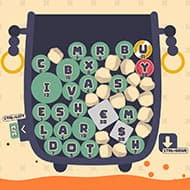
The board in Lexispell is a cauldron full of floating letter bubbles, and the first thing anyone notices is how physical it feels. Letters bob around, bump into each other, and when two matching ones touch they merge into a single larger bubble worth more points than the sum of its parts — the kind of satisfying growth mechanic players in the community shorthand as a Suika-style loop, borrowed from the watermelon-merging genre and bolted onto a word game. You drag letters together deliberately, or let physics do some of the work, then pull whichever ones you need into a word before the round’s letter limit runs out.
If the cauldron runs thin, you can ring a bell to drop more letters in, but there’s a hard cap — you cannot overfill the pot, which forces a constant judgment call between hoarding letters for a bigger word and clearing space to keep merging.
Some players treat every run as a slow, meditative puzzle, sipping through rounds with chill background music playing; others are only there for the Daily Challenge leaderboard and optimize every merge for maximum score per second.
Classic Craft, Letter Rush, and the Jar in Lexispell
Classic Craft is the mode most people start with — twelve stages, each cleared by hitting a score target rather than racing a clock, which gives newer players room to actually think through a word before committing. Letter Rush flips that patience upside down by dropping fresh letters continuously, so spelling quickly becomes the only way to stop the cauldron from overflowing entirely.
The Jar mode works differently again: instead of a constant drip of new letters, you get a fixed pool up front and have to squeeze as many valid words out of it as you can before you run dry. It rewards a different kind of thinking, closer to solving a locked crossword than reacting to a falling-tile game, and it’s frequently the mode players point to when explaining that Lexispell has more depth than a simple reskinned merge toy. Daily Challenge rounds use a shared seed so everyone is working from the same starting letters, which is part of why the leaderboard grind has stuck around.
Boss Rounds and Modifiers
Every third round in Classic Craft is a boss battle, and there are more than twenty of them in rotation, each one bending a rule you assumed was fixed. One boss forces every valid word during the fight to repeat a single letter, throwing out the alphabet’s usual variety entirely. Others go after your economy more quietly:
- Removing all point value from vowels for the duration of the fight
- Shrinking the available letter pool so fewer combinations exist
- Increasing the merge threshold so bubbles need to be larger before they combine
Because bosses are assigned at random each run, no two Classic Craft attempts play out quite the same way, which is a big part of why the base game doesn’t get stale even after dozens of clears.
Runes, Scrolls, and the Backpack in Lexispell
Between rounds a shop opens, offering scrolls, runes, and items bought with currency you earn by hitting each round’s target score quickly rather than just eventually. The backpack is where the real build-crafting happens — you can stash gem letters, wildcard asterisks, hashtags, and exclamation marks that pad out your available letter count when the cauldron isn’t cooperating. A big early multiplier from a well-timed rune can completely change which words are worth chasing for the rest of a run, turning short, safe plays into a liability compared to riskier long words.
The Alphabet Bonus and Where the Score Actually Comes From
One of the quieter systems is the ALPHABET bonus: every unique letter you use across a run adds a small multiplier, roughly 0.2 per letter, starting from zero — and using all twenty-six nets a flat bonus worth chasing on its own. Stacking that alongside scroll multipliers and gem letters is where the highest scores come from, more than any single big word. Players who get stuck on a spelling can open the pause menu for a built-in dictionary lookup rather than tabbing out, which keeps runs from grinding to a halt over an obscure word nobody’s sure is real.
Not everything about the experience is polished. The web build can lag during longer sessions, and more than a few players have asked for higher-contrast letter tiles, since some of the bubble colors blend together at a glance — a fair criticism for a game that otherwise leans on quick visual reads.
What happens when a boss removes vowel points in Lexispell?
Any word you spell during that fight still counts toward your total, but the vowels inside it contribute nothing to the score, so the strongest plays lean on consonant-heavy words and rely on merged bubbles and rune multipliers to make up the difference.
How is Jar mode different from Letter Rush?
Jar mode gives you one fixed batch of letters and no bell to refill it, so every merge and every word has to be planned against a shrinking, finite pool, while Letter Rush keeps dropping new letters continuously and punishes hesitation instead of poor planning.
What does the Alphabet bonus actually add to your score?
It’s a running multiplier that grows by about 0.2 for every distinct letter you’ve used in a run, topping out with a flat +26 once all twenty-six letters have appeared, which rewards varied vocabulary over repeatedly spelling the same safe short word.
Whether you’re grinding the Jar for a personal best or just letting a Classic Craft run wind down with a cup of tea, Lexispell keeps circling back to the same tension between vocabulary and resource management — do you burn a rune now, or save it for whichever of the twenty-plus bosses shows up next.