













Little Ghost





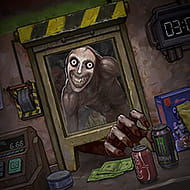

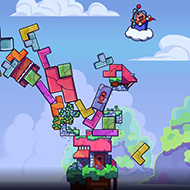
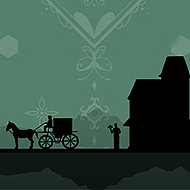
The only tool Little Ghost has against Prime Products Division isn’t a weapon — it’s a float, and that single design choice shapes almost everything else about how the game plays.
| Genre | Metroidvania, puzzle-platformer |
| Playable Character | Little Ghost, an inch-high figure |
| Combat | None |
| World | A single, interconnected collage landscape |
Meeting Little Ghost Inside a Home Office World
The entire map takes place across a wind-blown home office scaled up into a labyrinth — a sketchbook you can walk across, a bookshelf that functions like a vertical dungeon, a computer that hides its own internal maze. Every surface in the room becomes traversable territory, and the game never breaks that world into separate levels; it’s one continuous, non-linear space you unlock piece by piece.
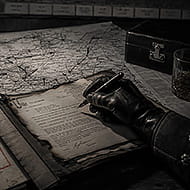
Uncovering the conspiracy behind Prime Products Division, the mysterious corporation whose products are scattered throughout the office, gives the exploration a throughline without turning it into a checklist. You’re rarely told exactly where to go next, which suits the game’s puzzle-first pacing but does mean getting lost is part of the intended experience rather than a failure state.
The Float Mechanic Replaces Combat Entirely in Little Ghost
There’s no fighting anywhere in the game, and the float stands in for the kind of aerial control most platformers hand you through a double jump or dash-attack. It’s softer and slower than either, built for threading through tight gaps and controlling a fall rather than covering ground quickly, and puzzle sections lean on it constantly to test whether you can hold precise position in midair.
No Currency, No Health Bar
Because there’s no combat, there’s also no currency system and no damage to manage — checkpoints are frequent enough that failure at a puzzle just means a quick reset rather than lost progress, which keeps the pacing calm even during the trickier platforming stretches.
Grappling Hook and Super-Dash Traversal
Two more familiar tools round out the moveset, and both get reused constantly once unlocked:
- The grappling hook pulls Little Ghost toward fixed anchor points, mostly used to cross gaps the float alone can’t clear
- The super-dash covers horizontal distance fast and doubles as a way to break through certain obstacles blocking a path
- Combining float, grapple, and dash in sequence is how the game’s later rooms expect you to move once all three are unlocked
Enemies-Turned-Allies and the Cast of Little Ghost
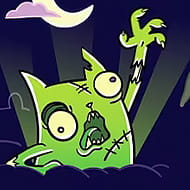
Rather than fighting anything, encounters resolve into companionship — creatures that would be hostile in another metroidvania instead become playable allies here, each carrying their own movement quirks into the moveset. Story-focused players tend to prioritize finding every one of these characters first, since the narrative threads mostly run through them rather than through environmental text.
Tarot Cards, Podcasts, and the Collectibles Loop
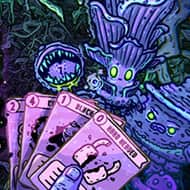
Collectibles double as media here instead of stat boosts. Tarot cards get shuffled and read as a loose framing device for chance and fate, while a Tamagotchi-styled interface organizes music and podcasts you find scattered through the world — over 20 bands’ worth of songs, all optional listening you can leave running while you explore. Completionist players gravitate here specifically, treating the media library as its own collection goal separate from finishing the story.
Exploring Prime Products Division Without a Map Marker
The map fills in as you go rather than being handed to you complete, and there’s no objective marker pointing you toward the next unlock. That’s a deliberate choice in service of the non-linear structure, but it’s also the one thing most likely to frustrate players expecting a more guided metroidvania experience — wandering is the intended method here, not a workaround.
Checkpoints, No Currency, and Low-Pressure Design in Little Ghost
With no health to lose and no currency to spend, the entire tension of the game shifts onto the puzzle logic and the platforming precision the float, grapple, and dash demand together. Movement-focused players get the most mileage chaining all three tools cleanly through a room; players here purely for the story and music can move slower without being punished for it.
Does Little Ghost have any combat at all?
None. Every encounter with a potentially hostile creature resolves into recruiting them as a playable ally rather than fighting them, which is central to the game’s design rather than a difficulty option.
Is Little Ghost linear or fully open from the start?
It’s non-linear, but ability-gated in the traditional metroidvania sense — grapple and super-dash unlock access to areas the float alone can’t reach, so backtracking through the collage world is expected.
How much music and how many tarot cards are actually in the game?
The collectible media library covers songs from over 20 bands alongside a full tarot deck, both organized through the same in-world interface you build up as you explore.
Being this early in its life, with only a handful of players having weighed in so far, Little Ghost is still finding its audience — but the float mechanic and the wandering, marker-free structure of Prime Products Division already make it feel like a distinctly different kind of metroidvania than most.