












Kaizo Knight











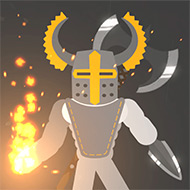
You line up a jump over a pit of spikes, release the key a fraction too late, and your tiny knight bursts on the spikes before the next screen even loads. That is the everyday rhythm of Kaizo Knight, a precision platformer inspired by kaizo-style levels where every screen is a carefully designed trap and success comes from repetition and perfect timing.
Precision Jumps in Kaizo Knight
The knight moves and jumps with tight controls, and every screen is built around precise inputs. Gaps are measured to the pixel, spikes line every surface, and some jumps require holding the key for exactly the right duration. Beginners often tap jump too quickly, cutting the arc short and landing on spikes.
Learning the jump arc is the foundation. Spending a few minutes jumping on the first screen to feel how height and distance respond to key presses saves many deaths later.
Players who love challenging platformers will feel right at home, because every death teaches something specific about the screen. Repetition is the whole game here.
Screens, Traps and Difficulty
Each screen is a self-contained challenge. Dying sends you back to the start of that screen, so progress is measured screen by screen rather than in long levels. Quick restarts keep frustration low and encourage another attempt immediately.
By the time you reach the later screens, traps combine: moving hazards, narrow ledges and tricky timing all appear together. Memorizing the safe path through each screen becomes essential.
A moment every player recognizes is the hidden trap that appears exactly where a safe landing seemed obvious. That kaizo-style surprise is the signature of the genre.
Habits That Clear Hard Screens
Experienced players break each screen into small segments. Instead of trying to clear everything in one go, they practice the first jump until it is automatic, then the next, building the full route piece by piece. That approach turns an impossible-looking screen into a sequence of manageable moves.
Rhythm also matters. Many screens have a natural tempo, and counting the beat between jumps helps keep inputs consistent across attempts.
Taking short breaks after many failed attempts is another underrated habit, because tired hands miss the precise timing that the later screens demand.
Kaizo Knight and Its Polarizing Difficulty
The difficulty divides players sharply. Fans of hard platformers love the challenge and the satisfaction of beating a brutal screen, while casual players often find it overwhelming. Hidden traps in particular can feel unfair on the first attempt.
Some also wish for more variety in mechanics, since the challenge relies mainly on jumping and precise movement. Others argue that this simplicity is exactly what makes each screen pure skill.
Speedrunners enjoy the short screens, which make optimizing routes and shaving seconds possible after the layout is memorized. Players often ask how to get better, and the answer is to focus on one difficult jump at a time rather than the whole screen. Others ask whether there are checkpoints, and the screen-by-screen restart works as a built-in checkpoint system.
Kaizo Knight rewards patience and precision, one spiked screen at a time. Learn your knight’s jump arc, expect traps where landings look safe, and every cleared screen will feel like a small victory over the kaizo design.