








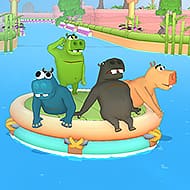


Throw Food For Animals




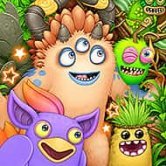







Throw Food For Animals looks like a lazy toss-and-wait toy but plays like a small economy puzzle. Every throw is a bet on where your food lands, and every coin you earn must choose between reach, bait quality and growth. The loop is simple, and the decisions hiding inside it are what keep players coming back.
The Throw, the Wait and the Catch
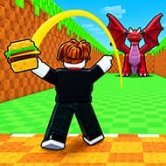
A round begins with food in your hand. You throw it toward the horizon, it lands, and an animal strolls over to claim it. The wait is short but loaded with suspense, because you never know exactly which creature is coming until it appears. That rhythm is what makes the game feel calmer than its economy suggests.
Whatever arrives joins your collection. Place it in the pen and it starts paying coins, which is how one humble Carrot can eventually grow into a whole income stream. Early on that stream looks tiny, but it compounds once a few earners are working.
Distance is the lever players feel most. Throw farther and you reach biomes with different animals, which is why training matters even though it seems unrelated to catching.
Three Places Your Coins Go in Throw Food For Animals
Coins have exactly three jobs, and understanding them clears up most beginner confusion.
- Better food from the Food Shop raises the rarity of the animals that come to you.
- Training at the pull-up stand adds distance so you can reach more biomes.
- Keeping animals in the pen protects the income that funds everything else.
None of these is wrong alone. The mistake is feeding only one of them. A player with huge reach and a weak Carrot sees remote biomes full of animals they cannot attract well.
The reverse fails too: top-tier bait with a short throw leaves you stuck near the starting areas. Balanced spending is the whole puzzle.
Where the Loop Slows Down
Past the opening stretch, prices climb and the pull-up stand turns into a grind. Players disagree on whether that pacing feels satisfying or stretched, and both opinions are fair.
What helps is giving each session a goal, such as saving for the next food rarity or looking for a gold copy of an animal you already own. Gold and size variants earn differently, so even a second Frog can be worth keeping.
Beginners tend to overlook that detail, and strategy fans love it, since it adds a spreadsheet layer on top of a casual toss.
Common Questions About Throw Food For Animals
- How do I catch rare animals? Use a rarer food from the Food Shop and make sure your throw is strong enough to reach the right biome. Food rarity runs from Common up to Cosmic, so the starter Carrot alone will not take you far.
- Does training or food matter more? They do different jobs. Food decides which animals are attracted, while training only adds distance, so a weak catch calls for better food and a short reach calls for the pull-up stand.
- How many animals can I collect? There are 140 animals spread across 17 biomes, from early catches like the Frog and Bunny to Supreme animals such as the Waste Harvester. Nobody sees them all in one session, so treat the roster as a long-term goal.
Every long session of Throw Food For Animals comes down to the same small loop: throw, wait, catch, place. Learn it with your Bunny and Frog first, and the Supreme animals become a question of patience rather than luck.