
























Basil Omori







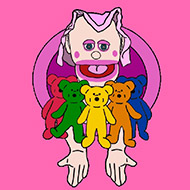





Omori opens in White Space — an empty room with nothing in it but a door, a light switch, and silence — and that stark opening tells you almost everything about the game’s approach before a single line of dialogue explains anything. It’s a game that trusts unease to do the storytelling, and it rarely lets players get comfortable for long.
| Genre | Psychological Horror RPG |
| Platform | PC / Browser |
| Core Systems | Emotion-based combat, dual real/dream worlds |
| Notable For | Tonal shifts between whimsy and horror |
Headspace and Faraway Town: Omori’s Two Worlds
Omori splits its structure between Headspace, a colorful dream world populated by friends like Kel, Hero, and Aubrey, and Faraway Town, the real-world setting where the same characters exist in a very different emotional state. Moving between the two isn’t just a setting change — Headspace’s exaggerated cheerfulness is deliberately unsettling once players start noticing how it contrasts with what’s actually happening to Sunny, the real self behind that dream persona.
Basil’s presence in Headspace carries a weight that isn’t obvious on a first playthrough, and part of what makes Omori worth replaying is noticing how much the dream world is quietly reacting to details the story hasn’t explained yet.
The Emotion System: Omori’s Core Combat Mechanic
Combat in Omori runs on an emotion system — Happy, Sad, Angry, and Afraid — where each state raises certain stats while lowering others, and emotions counter each other directly, similar to an elemental weakness chart but tied to mood instead of typing. Inflicting Afraid on an enemy that’s currently Angry can flip a losing fight, which means players who ignore the emotion system and just attack repeatedly miss most of the game’s actual combat depth.
Follow-up attacks add another layer on top of emotions, letting party members chain bonus damage when a teammate’s move sets up the right condition. Coordinating Kel’s support-focused kit with Aubrey’s more aggressive moveset is a specific skill players build over the course of the game rather than something the tutorial fully explains upfront.
Tone Shifts: What Beginners Get Wrong in Omori
New players often expect Omori to stay in one register — either the whimsical Headspace tone or the heavier real-world tone — and get caught off guard by how deliberately the game snaps between them. That whiplash is intentional. The game uses its cheerful presentation specifically to make the horror moments land harder than they would in a game that signaled danger consistently throughout.
Players also frequently misjudge Black Space, an area that behaves differently from the rest of Headspace entirely, treating it like a normal dungeon when it’s structured more like a psychological gauntlet meant to be endured rather than casually explored.
What the Community Debates About Omori
The pacing of Omori’s emotional reveals is the most consistently discussed topic in the community. Some players feel the game paces its heaviest story beats perfectly, letting Headspace’s whimsy build enough good will before undercutting it; others find certain stretches too slow before the real emotional weight of Sunny and Mari’s story becomes clear. Both perspectives come up constantly in community discussion, and the disagreement itself says something about how differently people respond to the game’s specific rhythm.
Do I need to understand the emotion system to beat Omori’s harder fights?
Yes — later fights are tuned around emotion counters specifically, and players who rely purely on raw damage without managing Happy, Sad, Angry, and Afraid states consistently struggle against enemies designed around that system.
Is Omori appropriate for players expecting a lighthearted RPG?
Not entirely — while Headspace has a genuinely whimsical tone, Omori deals with heavy psychological themes tied to Sunny and Mari’s story, and the tonal shifts between whimsy and horror are a core, intentional part of the experience.
What makes Black Space different from the rest of Headspace in Omori?
It breaks from Headspace’s usual cheerful tone and structure entirely, functioning more like a sustained psychological sequence than a typical explorable area, which is part of why players who expect standard dungeon logic there tend to struggle.
Omori earns its reputation by refusing to let White Space’s quiet opening or Headspace’s bright colors promise a comfortable story — every emotion-system fight and every trip back to Faraway Town pulls Sunny, and the player, closer to what it was all built to confront the whole time. Few games commit as fully to letting tone itself carry the narrative weight.