


















Buzz.EXE Remake




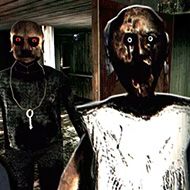

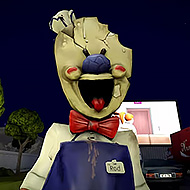

Two playable levels currently exist in Buzz.EXE Remake, and both of them are built directly on top of a real, historically accurate Sega Genesis Toy Story map rather than an original layout designed purely for horror pacing.
Rebuilding a Real Genesis Cartridge Into Something Else
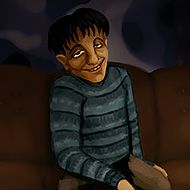
Buzz.EXE Remake frames its horror premise around fifteen-year-old Mike Anderson, living in California in 2005, who buys a secondhand Genesis out of nostalgia and finds a worn Toy Story cartridge in a downtown shop. Officially titled The Cursed Cartridge of Toy Story (2005), the project positions itself as an extensive rework of a smaller 2015 original released under the same Buzz.exe name, expanding that earlier concept into two full playable levels rather than a single short scenario.
What makes the level design specifically notable is that both stages reuse the actual layout data from the genuine Sega Genesis Toy Story release rather than building original geometry from scratch. Corrupted, out-of-place sections get stitched onto the end of each level, layered directly on top of the authentic retro map — meaning players who grew up with the real Genesis game tend to recognize the early portions of each level almost immediately, right up until those corrupted additions start diverging from anything the original cartridge actually contained.
What’s Actually Playable Right Now
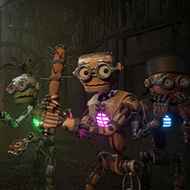
Woody remains the only controllable character across both public demo builds released so far. Rex, Hamm, Mr. Potato Head, and Rocky are all visible on the character select screen, functioning as a preview of planned content rather than anything accessible in the current build. Development has stayed openly gradual by design — the first demo went up in November 2025, an updated build followed in June 2026, and the developer has stated directly that expanding beyond Woody as a playable character is planned for a future demo rather than something being rushed toward a full release ahead of schedule.
A content warning covers blood, jump scares, sudden loud noises, and extreme flashing lights throughout Buzz.EXE Remake, placing it firmly outside lighter horror-adjacent fangame territory. Community reaction has focused heavily on how convincingly the “lost prototype” framing lands, with the corruption effects layered over an otherwise authentic-looking Genesis-era Toy Story presentation frequently singled out as the strongest single element of the current build.
How the 2015 Original Compares to This Expanded Remake
The original 2015 Buzz.exe existed as a much smaller-scale horror concept under the same core premise. Buzz.EXE Remake takes that foundation and expands it considerably — two full levels built on real Genesis map data instead of a single scenario, a defined framing story built around Mike Anderson rather than a more abstract setup, and an official subtitle, The Cursed Cartridge of Toy Story (2005), that the original release never carried. That expansion is precisely why the project is billed as a remake rather than a simple remaster: the underlying scope and structure have grown substantially beyond what the 2015 version originally offered.
Frequently Asked Questions
Is Buzz.EXE Remake built on an actual retro game’s level data? Yes — both current levels reuse the real Sega Genesis Toy Story map layout, with corrupted sections added on top specifically for the horror premise.
Which characters can currently be played? Only Woody, across both the November 2025 and June 2026 demo builds, though Rex, Hamm, Mr. Potato Head, and Rocky already appear on the character select screen for future access.
How does this remake differ from the original 2015 Buzz.exe? The remake expands a smaller single-scenario concept into two full levels built on real Genesis map data, adding an official subtitle and a defined framing story the original never had.
For a fan project still working through its second public demo, Buzz.EXE Remake has built a genuinely specific identity around one idea executed with unusual care: a childhood cartridge that quietly remembers something it should not, told through level geometry players may have actually played as kids.