













Death Ray Manta







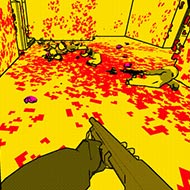
Your shield in Death Ray Manta does not regenerate the way most top-down shooters train you to expect, and the first time it fails to top back up during a quiet stretch is usually the moment a run ends. That single detail shapes almost everything else about how the game plays, turning every lull between waves into a choice: keep pushing, or hold position and let your systems recover.
| Genre | Top-Down Space Shooter |
| Platform | Browser |
| Core Loop | Dodge, shoot, survive escalating waves |
| Setting | Open starfield arena |
| Perspective | Top-down |
The Basic Rhythm of Death Ray Manta
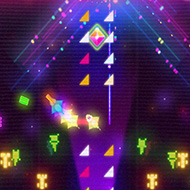
You pilot a small ship across an open field of stars, and the loop is simple: enemies drift in from the edges, you weave between their fire while returning your own, and the wave ends once the last one is destroyed. There is no cover and no terrain, so positioning is entirely about spacing yourself from incoming fire.
New players tend to survive longer than expected by keeping to the outer edges of the play space early on, since enemies generally spawn from set directions and staying mobile near the border gives more room to react.
Movement and Positioning in Death Ray Manta
Constant motion matters more than precise aim for most of a run. Standing still to line up a perfect shot is rarely worth it once more than one enemy is on screen, since a clean hit is almost never worth the exposure.
Diagonal movement dodges more incoming fire than straight lines, since most enemy shots travel in predictable directions and a diagonal path crosses fewer of them at once. Players who only move on four axes eat hits a slight angle would have avoided.
Reading Enemy Patterns Before They Punish You
Each enemy type telegraphs its attack slightly differently, and reading those cues rather than reacting to the shots themselves separates a clean run from a chaotic one. Faster, smaller ships swarm and fire in short bursts, while heavier ones hold a steadier line that is easier to predict but harder to fully avoid.
A quieter observation from actually playing: the pitch of the engine hum shifts slightly as more enemies enter the field, giving an audio cue that a new wave is spawning a beat before it appears on screen.
Shield Behavior and Why Sudden Deaths Happen
Shield delay: the shield does not begin recovering the instant you stop taking damage; a short window keeps it flat first, which is why players who dip in and out of fire too casually end up unshielded at the worst time.
Overlapping fire: most sudden deaths come not from one strong hit but from two or three smaller shots landing in quick succession before the shield can absorb and recover between them.
Weapon overheating: firing continuously without a break slows how quickly your weapon responds right when you need rapid output most, so short controlled bursts outperform holding the trigger down.
Where the Difficulty Curve Actually Tightens
The first stretch of waves is genuinely forgiving, built to teach movement and shooting basics. The real spike arrives once enemy types start mixing within the same wave instead of isolated groups, forcing you to track multiple threat patterns at once.
This is also where the shield delay turns unforgiving. Early on, taking a hit and retreating to recover is safe; later, that habit leaves you exposed long enough for a second wave to catch you before the shield recovers at all.
Community Habits That Separate Long Runs From Short Ones
Players talk about kiting the denser waves, leading a cluster of enemies along the arena edge rather than engaging head-on, buying time for the shield to recover while whittling their numbers down with grazing shots.
Another habit worth naming is burst discipline, firing in short controlled bursts instead of holding the trigger down, which keeps the weapon responsive exactly when a sudden cluster of enemies appears.
What Keeps Players Coming Back to Death Ray Manta
There is no story, no named cast, and no real ending beyond seeing how long a single run can last. For players chasing a longer personal best, the escalating wave structure gives a clean, repeatable challenge without much overhead between attempts.
The lack of variety in mission structure is a fair complaint some players raise, since every run follows the same wave escalation without alternate objectives to break up the pattern. It is a narrow game by design, and it does not pretend otherwise.
Death Ray Manta is not trying to be a deep or story-driven shooter, but the shield-delay mechanic alone gives it enough identity that a quick run still feels distinct from most other top-down shooters built around the same loop.