













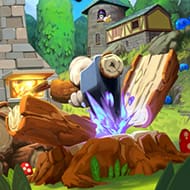
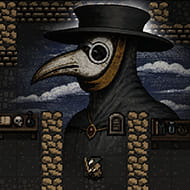


ShatAAAAp!

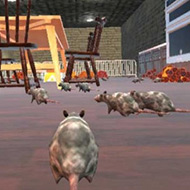







You're three minutes into a run, boxed in by horned raiders, and the only thing standing between you and a restart is whichever skill you slotted last. That's the baseline pressure ShatAAAAp! runs on: pick a hero and figure out which build holds once the screen fills with enemies.
| Genre | Horde survival, roguelite |
| Playable Heroes | Warrior, Huntress |
| Core System | Web of Wyrd knot placement |
| Best For | Build experimentation under pressure |
The Warrior and the Huntress: Two Ways to Fight in ShatAAAAp!
The Warrior plays like the name suggests, planting close and trading blows while a skill tree leans into raw damage. The Huntress flips that entirely, built around kiting hordes at range and punishing enemies who close without a plan.
Beginners pick the Warrior first because standing still feels safer, then get frustrated the moment a pack surrounds them from both sides. The Huntress rewards that same instinct once you learn to keep moving.
Both trees branch enough that two Warrior runs can feel like different heroes, depending on whether you lean into area damage or single-target burst. That branching is what players bring up most comparing ShatAAAAp! to other horde survival titles.
The Web of Wyrd and How Knots Change a Run
The Web of Wyrd is where the game separates itself from a plain survive-the-horde loop. Instead of a simple upgrade menu, you're placing knots onto a web, and where a knot sits relative to others determines whether its bonus stacks cleanly or gets wasted.
New players place knots wherever there's an open slot, missing that adjacency matters. Veterans plan a few knots ahead, treating the web more like a puzzle than a shopping list.
It's a system that divides opinion. Some find the spatial planning genuinely clever, while others find fitting a new knot into an already-built web closer to a chore than a reward.
Facing the Hordes of the Nine Realms in ShatAAAAp!
Enemies scale as you push through the Nine Realms, and the pacing is deliberately uneven. Early waves feel like a warm-up, then entire packs arrive at once with little warning once you cross into later territory.
The moment most players remember from a first run is a horde leader mixed into a regular wave, unannounced. It takes a few hits to realize one enemy in the crowd is hitting far harder than the rest.
Roughly four out of five player reviews describe the pacing positively, which tracks with how satisfying it feels once a build can clear a wave without kiting the whole time.
Where Red Slime Packs Turn a Run Around
By the third realm, red slime packs show up and change the tone of a run entirely. Players consistently flag them as tougher than anything before, hitting harder than their size suggests and clustering rather than approaching one at a time.
That difficulty spike is debated. Some see it as a fair wall forcing real engagement with the Web of Wyrd instead of coasting on early builds, while others feel the jump is steeper than needed.
Hitbox inconsistencies around these packs come up too. A swing that should connect occasionally whiffs against a slime's edge, a fair criticism rather than a nitpick.
- Warrior or Huntress first? The Warrior is more forgiving early since standing ground covers mistakes, but the Huntress teaches positioning habits that matter more once red slime packs appear.
- How does the Web of Wyrd differ from a normal skill tree? Bonuses depend on where a knot sits relative to others already placed, so the same skill performs differently depending on the web's shape.
- Why do red slime packs feel like a difficulty spike? They hit harder than earlier enemies and cluster together, punishing builds that only worked because earlier waves were thinner and slower.
ShatAAAAp! earns its tension from that mix: two heroes that play nothing alike, a knot system rewarding planning over reflexes, and a horde across the Nine Realms that never lets you relax once the red slimes show up.