




















Endacopia

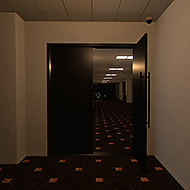


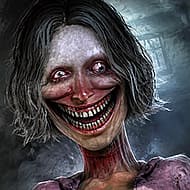
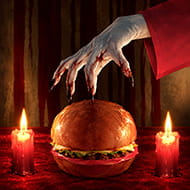
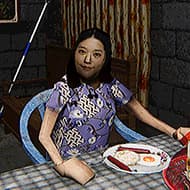

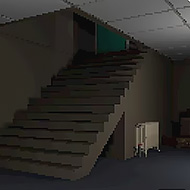
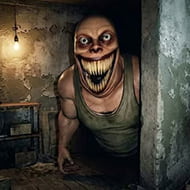


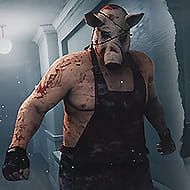
Endacopia looks like a scanned-in relic from a 1998 edutainment CD-ROM, all soft pastel rooms and a cheerful narrator tone, but it plays like something that wants to hurt you. That gap between what the game looks like it will be and what it actually demands from you is the whole point. You are guided through as a lost, senseless child named Mellow, and the house around you is not going to make this easy.
| Genre | Surreal Horror Adventure |
| Platform | Browser |
Waking Up as Mellow in Endacopia
The game opens in Mellow’s Room, and almost immediately hands control to a sassy wooden sign named Tip, who walks you through the basics in a tone that never quite matches what is actually happening around you. This mismatch between friendly tutorial energy and the wrongness of the house is something Endacopia leans on constantly, and it works because the game never breaks the bit to explain the joke.
From the Kitchen to the Hallway to the Bathroom, each early room in Mellow’s home introduces a new rule of this world’s logic, and none of those rules are explained the way a normal game would explain them. You are expected to notice things are off before anyone tells you so.
Henry and the First Real Threat
Henry, a burlap-covered lizard creature, is the first thing in Endacopia that genuinely wants to catch Mellow, and the shift from exploration to being actively hunted happens faster than the opening rooms prepare you for. Players commonly get caught off guard here simply because nothing before this point suggested the game could turn threatening this quickly.
What beginners get wrong with Henry specifically is treating the encounter like a puzzle to solve immediately. Early in the game, the smarter move is often just staying out of his path while you learn the layout around him.
Clocky, the Freelance Surgeon, and the Rules of Time
Clocky is a hostile clock creature stationed at doors throughout the house, built and deployed by a surgical robot called the Freelance Surgeon. Once Clocky appears, the pacing of Endacopia changes noticeably — doors stop being simple transitions and start being obstacles with their own timing that you have to respect or get punished for ignoring.
This is one of the clearest examples of the game’s core mechanic: ordinary household objects turned into rule-bound threats, where survival depends on learning each object’s specific behavior rather than reacting on instinct.
The Wall Bank and the Cheshire Secret
Deep in the house sits the Wall Bank, a coin-eating cube that hides one of the most talked-about secrets in the entire game: an eight-letter password, Cheshire, fed into a toilet to progress the story. Community threads on Steam and itch.io are full of players comparing notes on how they stumbled onto this, and the game rewards curiosity here in a way that feels earned rather than arbitrary.
Feed the password in too early, before the game has properly set it up, and Endacopia actually calls you out for it directly, breaking its own fiction with a line acknowledging you shouldn’t know this yet. That kind of self-aware wink is rare enough in horror games that it has become one of the most quoted moments among players discussing Endacopia in forums and comment threads.
Beyond the House: Green Hills, the Circus, and Timesville
Once Mellow’s home stops being the whole world, Endacopia opens into Green Hills, The Circus, The Office, and eventually the unsettling sprawl of Timesville and Misery Town. Each zone reframes the game’s central joke differently — Green Hills plays with pastoral cheerfulness gone wrong, while Timesville leans hardest into genuine dread.
By the time you reach Timesville, the game has fully abandoned any pretense of being for children, and that escalation, paced across roughly six hours for a full playthrough, is a large part of why Endacopia sticks with players after they finish it.
The Optional Bosses: Trapezist and Chameleon
Two of the game’s most divisive encounters are entirely optional. The Trapezist, a circus performer tied to achievements like Fatal Performance and Cut The Act, and Chameleon, Timesville’s serial killer who turns victims into puppets, can each be fought directly or avoided, with each path locking you into a different achievement and a different read on Mellow’s story.
Advanced players who want to see everything Endacopia offers will replay specific chapters just to try both the fight and avoid routes on these two bosses, since neither path is clearly the “correct” one.
What the Community Actually Argues About
Endacopia sits at 99% positive across more than 1,300 Steam reviews, which is an unusually strong consensus for a horror game. Even so, there’s real disagreement in the community about the tonal whiplash between the cheerful edutainment visuals and the genuinely graphic body horror the game escalates to — some players find that contrast is exactly what makes it work, while others find it uncomfortably harsh for a game that looks, on the surface, like something aimed at children.
Content warnings on the store page list blood, violence, death, and drug references, which is worth knowing going in if the visual style has you expecting something gentler.
Reaching One of Endacopia’s Endings
Endings branch based on choices made well before the final rooms, including how the Kitchen and Coins puzzle chain resolves. One documented path pulls Mellow into the toilet by the Red Creature that first appears near the end of the earlier demo content, a small detail that longtime players treat as a direct callback for anyone who played Endacopia before the full Steam release.
Endacopia never tells you which ending is the “true” one, and it does not need to. Mellow’s story works because the house keeps rewriting its own rules around you, and by the time you understand Henry, Clocky, and the Freelance Surgeon well enough to survive them, the game has already moved on to something stranger.