























Keeping You Close












What happens if you never open the basement door in Keeping You Close? Nothing good, as it turns out — neglect is just as much an ending path as anything else in this short visual novel, and the game makes sure you feel the weight of that choice from the very first scene onward. There’s no way to stall for time here; every visit you make, or every visit you skip, is quietly doing something to one of the two meters running underneath the story.
Managing Health and Sanity in Keeping You Close
Two meters run underneath everything you do: their health and your own sanity. Health tracks how well you’re caring for the person locked in your basement, dropping if you neglect them and recovering if you tend to them with food, attention, or basic comfort. Sanity tracks you instead, and it bleeds down the more you talk to them, especially if you’re also caring for them at the same time, since the emotional cost of confronting someone you’ve caged compounds the longer the conversation runs.
Beginners tend to treat both meters like they’re working toward the same goal, caring and talking in equal measure because that feels like the emotionally honest choice. It isn’t — the game is built so that consistent, careful attention without much conversation is actually the path that lets you walk away clean by the end. Players who lean into dialogue because they want closure, or because they feel guilty ignoring someone in that position, are often the ones who end up draining sanity without realizing how close they are to the breakdown ending.
Where this gets tricky is that the game never spells out the thresholds directly. You’re reading tone in the dialogue and guessing how close you are to a breaking point, which is part of why players compare notes in the comments about which combination of choices actually triggered which ending for them. Some players describe this as reading the game “by vibes” rather than by numbers, since there’s no visible meter onscreen telling you exactly where health or sanity sit at any given moment — you’re inferring it from how the writing shifts.
Once you’ve been through a run or two, a pattern starts to emerge: the days where you say nothing and just leave food tend to feel uneventful, but they’re doing the most work toward the ending where you eventually walk away. Players who go in expecting a traditional visual novel pacing, with steady dialogue building toward a climax, often misread this quiet rhythm as the game having little content, when it’s actually the mechanic asking you to hold back.
The Cage, the Basement, and Why Location Matters in Keeping You Close
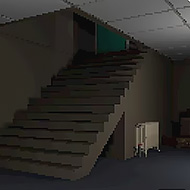
The setup is blunt: your closest friend loved you enough to hurt the people around you to keep you for themselves, so you locked them in a rusted dog cage in your basement instead of anywhere else in the house. That specific detail — the cage, not a locked room or a chained door — sets the tone for every interaction that follows, and it’s the image most players bring up first when they talk about the game. A cage implies something closer to an animal than a person, and the writing leans into that discomfort rather than softening it.
Because the whole story plays out in that one space, every visit to the basement carries weight. There’s no neutral scene here the way a longer visual novel might pad things out with filler dialogue or unrelated side content; each conversation is doing double duty, moving both meters and moving the narrative at the same time. Players used to longer VNs with dozens of scene locations sometimes find the single basement setting claustrophobic on purpose, and that’s clearly by design given how tightly the whole piece is scoped.
The basement setting also means there’s no escape valve for the player the way there might be in a game with multiple rooms to explore or distract yourself in. Every session is you, the cage, and whatever you choose to say or not say, which keeps the tension concentrated instead of spread thin across a larger map. Speedrunning-minded players who want to see every ending in one sitting still have to sit through the same claustrophobic scene repeatedly, since there’s no way to skip past the basement to get to a different outcome faster.
Reaching Each Ending in Keeping You Close
Three outcomes wait depending on how you balance the two meters. Care for them without talking much and you eventually leave, closing the cage on that chapter of your life for good. Neglect them until health is well below empty and they die regardless of whether you kept talking, since neglect overrides any conversational effort you put in afterward. Care for them and keep talking until your own sanity collapses, and you get the breakdown ending instead — the one where the story implies you’ve lost your grip rather than resolved anything, leaving the fate of the person in the cage deliberately unclear.
Because the whole game was built for a jam with a strict word count under 1000 words, a lot of what happens after each ending is left deliberately open, and the community treats the interpretation of that final scene as half the fun of finishing a run. Comment sections on the game’s page are full of players asking each other what the breakdown ending is actually supposed to mean, and the creator has responded directly to confirm that some ambiguity was intentional given how little room there was to spell things out.
Players chasing all three endings in one sitting run into a specific problem: because the meters shift gradually and invisibly, it’s easy to overshoot into one ending while trying to deliberately steer toward a different one, especially on a first attempt. This is why most completionist-minded players recommend a save-scumming approach, replaying from key decision points once you have a sense of how the writing hints at where each meter sits.
What Players Wanted More of in Keeping You Close
The honest criticism that comes up most is length and depth — some players wanted more scenes, more art, or additional endings beyond the three that exist, and a few felt the premise deserved more room than a jam format allowed. It’s a fair point given how strong the voice acting and concept landed for most players, and it’s the kind of feedback the game’s own creator has acknowledged directly in the comments, mentioning plans to revisit the narration to make the existing endings read more clearly rather than expanding the scope outright.
What nobody seems to argue with is the voice work carrying scenes that would otherwise rely entirely on a single piece of art per route. It’s doing a lot of the emotional labor that the short runtime doesn’t leave room for elsewhere, and multiple players single out the performance as the reason the ending they got stuck with them days later despite the whole experience lasting well under an hour.
There’s also a smaller, quieter piece of praise that comes up often: players have pointed out that Keeping You Close is one of the few games in the yandere genre to write its captive character as non-binary rather than defaulting to the usual gendered framing, and that detail has become part of how the game gets discussed and recommended within that specific community.
However you steer it, Keeping You Close keeps coming back to the same rusted cage in the basement, and it’s that one image — more than any ending you land on, whether it’s the quiet goodbye, the death from neglect, or the breakdown that closes the story on you instead of them — that stays with most players long after the credits roll.