
























Gumball’s Nightmare

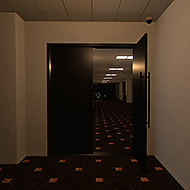




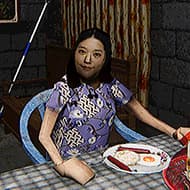





Gumball’s Nightmare looks like a cheerful callback to Elmore’s pastel-colored chaos but plays like a home invasion you can’t escape. The premise is simple on paper: something has gotten into the Watterson house, and Gumball, Darwin, and Anais have to survive the night without knowing exactly what it wants. That contrast between the source material’s tone and the game’s actual pressure is most of what makes it click.
Setting Foot in the Watterson House
The map is compact by design, built almost entirely around the Watterson living room, kitchen, and upstairs bedrooms, so the game leans on repetition and familiarity rather than sprawling exploration. That’s a deliberate choice — you learn the house fast, and once you do, the game starts using your own confidence against you by rearranging small details you’d stopped paying attention to. A dish left in the sink, a chair pushed in slightly wrong, a hallway light that was on a minute ago and now isn’t — none of it announces itself, and that’s exactly the point.
Anais is central to most of the early objectives. Players are typically responsible for keeping her calm, fed, and settled before the intruder becomes active, which means the first stretch of the game plays almost like a mundane babysitting simulator before it stops being mundane at all. Completing her routine usually takes somewhere around eight to ten minutes on a first attempt, and the game uses that stretch to teach the house layout without a single scripted scare, which is part of why the eventual tonal shift lands as hard as it does.
New players consistently underestimate how much noise ordinary actions make in this game. Opening cabinets, running the microwave, even walking too fast across the kitchen tile draws attention long before most players expect a threat to be listening yet. Cautious players — the ones who instinctively slow down near doorways — tend to get a genuine head start once the setup phase ends, since the house rewards habits built early rather than reflexes learned under pressure. Players who favor a more reckless, exploration-first approach often pay for it later, since rushing through Anais’s routine tends to leave rooms in states that make the back half of the night harder to read.
When the Threat in Gumball’s Nightmare Actually Shows Up
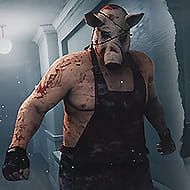
Once the intruder becomes active, the game changes completely. It doesn’t patrol on a fixed loop; it responds to sustained sound and light, which means players who kept the house quiet during the setup phase get a real head start over players who didn’t. The community has taken to calling this shift “the flip,” the moment the ambient hum of a normal Watterson evening drops out and the house effectively holds its breath.
Darwin’s role shifts here too — several objectives require splitting attention between him and Anais, and players who fixate on one tend to lose track of the other at the worst possible moment. Completionist players chasing every ending tend to replay this section obsessively, since small choices earlier in the night affect which of the game’s three endings becomes available. Once Darwin starts calling out from a separate room, the game is quietly testing whether you built a mental map of the house during the quiet phase or just wandered through it.
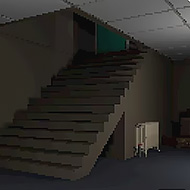
The basement sequence is the point where most first attempts end. It’s dark, it’s narrow, and the game gives almost no warning before things go wrong down there, which some players find thrilling and others find close to unfair. Speed-focused players tend to treat the basement as a calculated risk worth skipping entirely on a first run, while lore-curious players go down anyway just to see what the game does with the space, usually at a cost. By the time you reach the basement door, the game has already decided how forgiving the rest of the night is going to be.
Endings and Why Players Keep Replaying
Reaching the good ending requires finding the basement key, feeding Gumball and Darwin, and getting everyone out the front door before the intruder catches up. Missing any one of those steps tends to funnel players toward the bad ending instead, which arrives with far less warning and far more finality. The key itself is the run’s real bottleneck — its location shifts subtly enough between playthroughs that memorizing a single spot doesn’t guarantee a repeat success.
Speedrun-minded players treat the key location as the run’s real bottleneck, since it’s rarely where the game’s early hints suggest. Story-focused players, on the other hand, tend to explore every closet and drawer on a first playthrough just to see how far the writers pushed the contrast between Elmore’s usual cartoon logic and this much darker framing. That exploratory instinct is also how most players first stumble onto the secret ending, which isn’t hinted at anywhere in the main objectives and instead rewards players who interact with background details most walkthroughs skip entirely.
Getting all three endings in a single sitting typically takes most players two to three full runs, since the good and secret endings both depend on choices made well before the intruder becomes active, long before their consequences are obvious. That delayed payoff is a big part of why the game has held onto a steady replay community rather than being treated as a one-and-done watch-a-video horror title.
A Frequently Divisive Design Choice
Not everyone is happy with how abruptly the bad ending can trigger. Some players feel it undercuts tension built over the previous twenty minutes by ending things almost instantly once a mistake is made, with little room to recover. Others argue that abruptness is the whole appeal, since it mirrors how quickly things fall apart for the Wattersons once the intruder decides to act.
The debate shows up constantly in comment sections and community discussion threads, usually framed around whether Gumball’s Nightmare is being unfair or simply honest about its own stakes. Players who came in expecting a traditional jump-scare gauntlet tend to land on the “unfair” side of that argument, while players who approach it as a tighter, more consequence-driven experience generally defend the pacing as intentional rather than sloppy.
What keeps people coming back, divisive ending aside, is watching a familiar cartoon family handled with real stakes for once. Gumball’s Nightmare doesn’t rely on shock value alone — it earns its dread by making you care whether Anais makes it to morning, then daring you to keep her safe anyway.