






















House of Puso










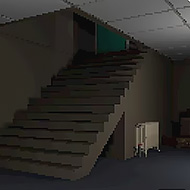
House of Puso looks like a soft, sketchbook-style horror story about two friends, but it plays like watching someone slowly lose their grip on what’s real. Built around Puso, a white arctic fox, and his best friend Bayani, a kappa with a shell-like torso, the game follows their time together in Puso’s house — a place that isn’t as ordinary as it first appears.
Puso’s House as a Space That Turns Against Him
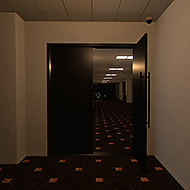
The setting rarely changes rooms, and that’s deliberate. Most of House of Puso takes place inside Puso’s home, where strange holes have started appearing in the walls, holes that produce sound no ordinary house should make. Rather than sending players out into new locations, the game keeps circling back to the same rooms, letting familiarity curdle into dread the longer you stay in them. Fans in the community, often shortening the series’ name to “HOP” in discussion threads, tend to describe this pacing as claustrophobic in the best possible way — you’re never given a reason to feel safe just because you already know the floor plan.
Bayani visits often, and his presence changes the emotional register of every scene he’s in. He’s warm and a little reckless, the kind of friend who treats Puso’s house like a playground even as the holes get worse, and that mismatch between his easy affection and the house’s growing wrongness is where most of the game’s tension actually lives. His kappa design adds a strange, almost comforting physicality to these scenes — the way he can retract his neck and limbs like a turtle pulling into its shell reads as playful early on, then starts to feel unsettling once players notice he does it most in the moments Puso seems least okay. Players drawn to the series for its quieter, slice-of-life stretches tend to linger on these scenes, while players there for the horror push forward looking for the next unsettling turn.
Cleaning is one of the game’s recurring activities — Puso tries, repeatedly, to fix or hide the holes before Bayani arrives, and the game frames this less as a puzzle to solve than as a losing routine Puso can’t seem to stop performing. Once the holes reappear after a cleaning pass, the game rarely resets the tension back to zero; each return feels a little worse than the last, and the house starts to feel less like a location and more like a pressure that’s slowly closing in on Puso specifically. It’s a small, domestic detail, and it’s exactly the kind of thing that sticks with players longer than a jump scare would.
Across the series’ four released episodes so far, the house itself barely expands beyond a handful of core rooms, and that restraint is part of the design rather than a budget limitation. Players who’ve followed House of Puso from its earliest entries often point out how much scarier the space becomes purely through repetition, without a single new room being added to explain it.
What House of Puso Is Actually About Underneath the Horror
Strip away the strange visuals and House of Puso is a story about two characters carrying trauma they don’t fully understand and definitely haven’t processed. The game doesn’t explain everything directly — it leans on implication, half-finished conversations, and objects left in frame a beat too long, which is very much in keeping with the psychological horror tradition it’s drawing from. Puso’s fractured composure, the way his fur visibly ruffles and his expression shifts under stress in certain scenes, functions as one of the game’s few visual tells that something underneath the story is close to breaking through.
This restraint is also where the community is most divided. Some players find the ambiguity genuinely upsetting in a way that feels purposeful, arguing that the story earns its unease by refusing to spell out what happened to either character. Others feel the vagueness leaves too much unresolved, especially given how heavy the implied subject matter is, and wish the game gave players firmer emotional footing before asking them to sit with it. That disagreement shows up constantly in community discussion spaces, where longtime followers debate whether Gigglegunks, the series’ creator, is building toward answers in later episodes or intentionally withholding them for good.
Because of that subject matter, House of Puso carries a clear content warning, and it’s not intended for younger players or anyone sensitive to themes of abuse and self-harm. That’s worth knowing going in rather than discovering mid-session, and it’s a big part of why discussion around the series tends to come with disclaimers attached, even from fans who are otherwise enthusiastic about recommending it.
Is House of Puso connected to a wider story?
Yes — it’s adapted from an ongoing animated series following Puso and Bayani, and the game draws its characters, setting, and tone directly from that source material rather than inventing a separate continuity. Episodes like Winter with Puso and Bayani and Cleaner establish the friendship and the house’s early wrongness, and the game leans on that same emotional throughline.
Does the game explain what’s causing the holes in Puso’s house?
Not directly. The game treats the holes as a symptom of something deeper in Puso’s past rather than a puzzle with a clean answer, and it’s more interested in how he and Bayani react to them than in resolving where they came from, leaving that thread for players to interpret rather than solve.
House of Puso isn’t trying to be a conventional scare machine — it’s a quiet, uncomfortable portrait of Puso and Bayani’s friendship fraying under weight neither of them can name, and that’s what makes the house itself, holes and all, impossible to shake once you’ve spent time inside it.