



















Splatoon Raiders
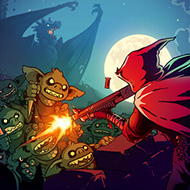
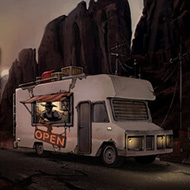




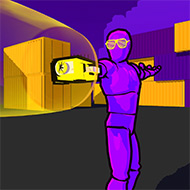

What happens when your Bot Buddy goes down mid-raid and you’re three Salmonids deep with no cover in sight? That’s the exact moment Splatoon Raiders is built around, and it’s a very different pressure than anything the mainline series has asked of players before.
| Genre | Third-person action shooter |
| Platform | Nintendo Switch 2 |
| Mode | Single-player, with up to 4-player co-op |
| Setting | Spirhalite Islands |
Landing on the Spirhalite Islands
The premise is short and gets out of the way fast: a storm forces Deep Cut’s helicopter down, and the Mechanic — that’s the player — ends up stationed on the Spirhalite Islands with a Hideout Ship as home base. From there, Splatoon Raiders becomes a loop of picking a destination, running a raid, and hauling salvage back to upgrade both gear and the ship itself. The islands themselves aren’t a single map but a set of destinations you pick from at the Hideout Ship, each with its own layout and enemy density, so no two sessions play out with quite the same rhythm.
Newcomers coming from the mainline multiplayer games sometimes expect turf-based objectives right away. Splatoon Raiders is closer to a looter-shooter in structure, and the first couple of raids exist mostly to teach that distinction. Once the tutorial raid wraps and you’re handed your first proper destination choice, the game stops holding your hand and starts expecting you to read enemy patterns instead of just spraying ink and hoping.
Players coming in fresh off Splatoon 3 sometimes struggle to unlearn turf-coverage habits, since painting ground for movement still matters here but no longer scores points on its own — it’s purely a means to an end, not the objective itself. That adjustment period is short, usually gone by the second or third raid, but it’s a real one the community brings up often in early impressions threads.
Deep Cut’s Role in Splatoon Raiders
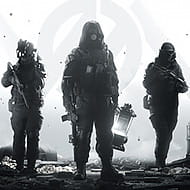
Shiver, Frye, and Big Man make up Deep Cut, and one of them accompanies you on every raid inside a construct called the Bot Buddy. That construct fights alongside you, drills for loot, and — critically — can go down if you’re not managing the fight well, which forces the game to stay tense even in solo play. Which member joins you isn’t purely cosmetic either; each of the three brings a slightly different attack pattern and drilling speed to the Bot Buddy, so raids can feel meaningfully different depending on who’s riding shotgun that trip.
Players who favor a support playstyle end up leaning on Bot Buddy positioning constantly, since it functions as both a damage source and a safety net during heavier waves of Salmonids. Aggressive players, by contrast, tend to treat the Bot Buddy as a distraction tool — parking it near a group of enemies to draw fire while they flank with their ink-flinging weapon of choice, a tactic the community sometimes calls “buddy-baiting” in raid chat.
Once a Bot Buddy goes down mid-raid, it doesn’t just vanish — it needs reviving, and ignoring a downed buddy for too long starts costing you the drilling speed and cover fire you were relying on for the rest of the run. That single mechanic is responsible for more panicked late-raid decisions than almost anything else in the game.
Gadgets, Weapons, and the Hideout Ship Loop
Salvage collected on a raid — including Spirhalite Crystals — feeds directly into upgrading mechanical gadgets, ink-flinging weapons, and the Hideout Ship. The loop breaks down into a few repeatable steps, and each one carries its own consequences if you skip or rush it:
- Pick a raid destination from the Hideout Ship, since higher-tier destinations demand better gear before they’re worth attempting at all.
- Fight through waves of Salmonids and collect salvage, because leaving loot behind on the map means fewer upgrade options back at the ship afterward.
- Extract and spend loot on gear or ship upgrades, as sitting on unspent Spirhalite Crystals just delays the power spikes that make later raids survivable.
- Take on tougher raids with better gear equipped, which is the only real way to unlock the islands’ harder destinations and their bigger bounties.
Speedrunners and completionists diverge hard here — one group rushes extraction the moment a raid objective clears, the other clears every enemy on the map before heading back, and both approaches are viable depending on which upgrades you’re chasing. Once you’ve unlocked the Exploration Bot upgrade path, the calculus shifts again, since a stronger bot makes full clears meaningfully faster and less risky than they were in the early game.
Weapon variety is one of the more consistently praised parts of the loop — dozens of ink-flinging weapons and mechanical gadgets are available to unlock, and community discussion tends to center on which combinations pair best with which Deep Cut member’s Bot Buddy style. That said, gear grinding does slow noticeably by the mid-game, and even players who love the loop admit that later upgrade tiers ask for more repeated raids than the earlier ones did.
Salmonids and the Difficulty Curve in Splatoon Raiders
Difficulty in Splatoon Raiders scales with how many players join a raid, which means a four-player co-op session throws noticeably more Salmonids and tougher bosses at you than a solo run does. Early raids stay manageable even alone; it’s once bigger bosses show up that squads start to matter. By the time you reach the islands’ larger boss encounters, going in without at least one other player alongside your Bot Buddy turns what should be a tense fight into a genuine attrition battle.
You can also call for backup mid-raid or drop in on someone else’s session, and helping out nets a Help Bonus in weapons or gadget parts — a detail that keeps the community actively cross-pollinating between solo and co-op play instead of splitting into separate camps. Drop-in players sometimes refer to this as “raid hopping,” jumping between strangers’ sessions purely to farm Help Bonus materials without committing to a full run of their own.
One frequent point of debate among players is how steep the difficulty jump feels once Salmonid variety increases past the early islands — some find the escalation fair and readable, while others feel a handful of enemy types deal damage that outpaces what early-game gear upgrades can reasonably offset. It’s a criticism that shows up often enough in reviews and community threads to be worth acknowledging rather than glossing over.
Is Splatoon Raiders single-player or multiplayer?
It’s built primarily as a single-player game, but supports up to four players in co-op, either locally or online, with difficulty adjusting automatically to match however many players — and however many Bot Buddies — are present on a given raid.
Who accompanies you on raids?
A member of Deep Cut — Shiver, Frye, or Big Man — joins each raid inside the Bot Buddy construct, fighting Salmonids and drilling for salvage alongside you, with each member offering a slightly different combat rhythm to build a run around.
What do you actually collect during a raid?
Salvage including Spirhalite Crystals, which get spent back at the Hideout Ship on weapon upgrades, mechanical gadgets, and improvements to the ship itself, with better gear in turn unlocking access to the islands’ tougher raid destinations.
The lack of competitive turf modes will disappoint anyone hoping for more Splatoon multiplayer, but as a raid-focused loop built around the Hideout Ship, a rotating cast of Deep Cut companions, and the ever-present risk of losing your Bot Buddy mid-fight, Splatoon Raiders carves out its own identity inside the series.