


















Kobayakawa-san Is a Soulslike

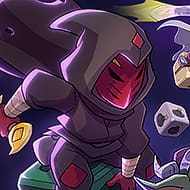


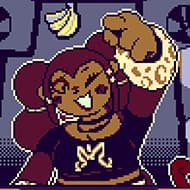




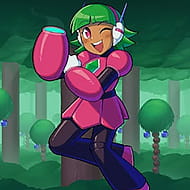
Kobayakawa-san Is a Soulslike looks like a five-minute dating sim but plays like a boss rush where one wrong answer ends the run instantly. There is no slow-building affection meter here, no dialogue tree that gently nudges you toward a good ending. Every exchange with Kobayakawa-san is staged as a fight, and the only tools on offer are Light Attack, Heavy Attack, Parry, and Dodge.
| Genre | Visual novel framed as soulslike combat |
| Playtime | Roughly 5 minutes per attempt |
| Platform | Browser and Windows download |
| Language | English and Japanese |
Reading Kobayakawa-san Is a Soulslike Like an Attack Pattern
The premise is simple enough to explain in one sentence: you were caught talking to another girl, and now you have to survive the conversation that follows. Each line Kobayakawa-san delivers functions the same way an enemy telegraph does in an actual soulslike game, and the response you pick is treated as your counter to that telegraph. Read the wrong tell, and the screen cuts to a death message the same way a boss fight would punish a bad dodge.
What trips up first-time players is trying to apply normal dating sim logic to a system that is not asking for the nicest answer. A response can sound romantic and still be the wrong move if it does not match what her line was actually testing. The game is grading whether you correctly identified the pattern in front of you, not how warm your answer sounds.
Because the whole thing runs in a browser and takes about five minutes, players tend to run it back multiple times in a single sitting, treating each attempt the way they would a boss retry rather than a one-and-done visual novel.
Why Light Attack Rarely Ends a Conversation with Kobayakawa-san
Light Attack is the option most new players lean on because it feels like the safest, lowest-commitment choice. In practice it resolves fewer situations than expected, because several lines are built to punish a hesitant response just as hard as an aggressive one. Heavy Attack carries the opposite problem, committing fully to a single reading with no partial credit if that reading is wrong.
Newer players often oscillate between Light Attack and Heavy Attack without ever settling into Parry or Dodge, the two options built specifically for the defensive beats in the conversation. Once a player recognizes that her dialogue has recognizable rhythms, the four-option system stops feeling random.
The Roll Timing Most Players Misjudge
Dodge is translated in-game as a roll, and it is the option most closely tied to soulslike muscle memory. Players instinctively reach for it whenever a line feels aggressive, which is often correct, but some of the harder beats specifically bait a roll and punish it, forcing players to second-guess an instinct that usually keeps them alive elsewhere.
This is the single moment most community discussion circles back to, with clips shared after the English release repeatedly pointing at the same exchange as the game’s sharpest joke about soulslike conditioning.
Once a player has been caught by it once, the instinct usually flips, and Parry starts getting tested in situations where Dodge used to be automatic. That recalibration is often what separates a clean run from a repeated one.
What the Death Screen Teaches in Kobayakawa-san Is a Soulslike
The death screen drops the player right back into the exact line that killed them, encouraging an immediate retry instead of a restart from the beginning. That single design choice is why most players describe finishing the game in one sitting rather than walking away after the first failure.
Players who treat every failed exchange as new information tend to clear Kobayakawa-san’s gauntlet within a handful of attempts, while players who keep guessing without adjusting can bounce off the same wall for longer than the runtime suggests.
The one-life instant-death structure is also the most divisive part of the design. Some players find it a clever punchline on a familiar genre; others feel it undercuts the romance the game is nominally about.
What does Dodge actually do in Kobayakawa-san Is a Soulslike?
Dodge functions as a defensive read against lines that carry aggressive or confrontational energy, similar to rolling through an attack animation in a standard soulslike game. It is not a universal safe option, since certain lines punish a rolled response.
Is there more than one ending in Kobayakawa-san Is a Soulslike?
The core loop is built around surviving a single escalating conversation rather than branching toward multiple distinct endings. Replay value comes from learning Kobayakawa-san’s pattern well enough to clear the exchange cleanly.
Why do wrong answers kill you instantly instead of lowering a relationship meter?
The instant-death structure is the game’s central joke, taking the low-stakes formula of a dating sim and reframing it with boss-fight consequences, where the only thing that matters is reading Kobayakawa-san’s line correctly before answering.
Kobayakawa-san Is a Soulslike earns its short runtime by never letting a single exchange feel like filler, and the roll-baiting moment late in the conversation proves the pattern-reading is deliberate rather than random. Whether you clear it on the first try or die repeatedly to the same line, the game is built to be replayed until Kobayakawa-san’s tells stop feeling unfair and start feeling readable.