




















The Additional Dimension



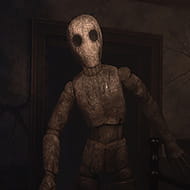



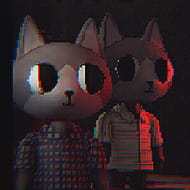




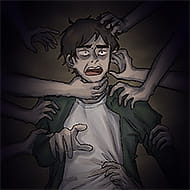

In The Additional Dimension you start as an Associate Professor on an honorary mission that your supervisor Petrov put you on: step into a spatial anomaly that a Soviet collider punched through reality in 1970, deploy a sensor array, and come back. The errand sounds routine, which matters, because the horror that follows depends on how little you expect from it. A full run takes roughly 30 to 40 minutes, and almost every minute is spent working out the logic of a place that should not exist.
| Genre | Psychological horror adventure |
| Setting | Soviet research base, 1970 |
| Platforms | Windows, Linux |
| Length | 30 to 40 minutes |
| Endings | Two |
| Controls | Keyboard and mouse |
The Associate Professor’s Mission in The Additional Dimension
You play as an Associate Professor sent to enter the newly discovered spatial anomaly, deploy a sensor array, and return. The moment the device locks into place, the radio cuts out and the elevator is gone. From that point there is nobody to call and no route back, which turns a box-ticking assignment into a slow-burn psychological nightmare.
Your supervisor Petrov is the reason you are standing in front of the anomaly at all, and that gives the opening a bitter, human edge that pure cosmic horror often lacks.
Only three hours separate the collider opening the hole from you being sent through it, and the whole situation feels rushed and underprepared because of that. Players who come for story-driven horror will find the setup does most of the work before a single corridor appears.
Why the Hallway Loops Back on Itself
Early in the game, once the elevator is gone, you start moving through liminal corridors, and the first real obstacle is a hallway that loops into itself. There is no combat to solve it and no item to find. The puzzle is pure spatial logic, and it sets the tone for everything that follows in the base.
- Reach the room with calculations on the floor and handprints on the wall.
- Notice that there are three ways out: forward, left, and right.
- Take the right passage, because forward and left always loop back.
The right passage is the one players miss, since the darkness hides it until you are close enough to see it. One player reported spending ten minutes alternating between left and right on a replay before getting the answer.
Players who assume every loop hides a clever trick tend to overcomplicate it, when the answer is simply the passage you cannot see yet. Once you understand that lesson, the loop stops being a wall and starts being a pattern you can read.
Reading the Notes Left Around the Base
Much of the story reaches you through notes scattered around the base, and commenters praise how easy they make the plot to follow. Combined with strong voice acting, they carry a time loop and a time-travel thread that goes well beyond a typical wandering-in-empty-rooms setup. The mathematical errors of the past are not a background detail, because they decide how the story can end.
The volume of reading is the most divisive part of the game. Some players say there is quite a bit of it and that it could be dialed back, while others name the notes as the reason the story works so well.
The pacing holds up regardless. The puzzles are not overly difficult, but they are enough to make you turn around a few times, and that small amount of backtracking adds to the feeling of disorientation.
How The Additional Dimension Reshapes Backrooms-Style Horror
The pitch is the Backrooms with a Soviet twist, and the setting does real work. A collider accident gives the endless corridors a reason to exist, so the space feels like a scientific failure instead of vague unreality. The PlayStation-era PSX look suits that idea, with rough, chunky surfaces that make a research base feel both dated and wrong.
The locations are original and well designed, according to players who came back after finishing other horror releases. Each area feels designed rather than copied, which keeps the wandering from turning stale over 30 to 40 minutes.
Fans of liminal space horror will recognize the genre, but players say it feels like much more than another typical liminal-space game. The time loop and the base infrastructure give the dread a structure that most imitators lack.
Chasing Both Endings
The game ends in one of two ways, and each one costs something. Replaying to see the other takes only another 30 to 40 minutes, so completing both is realistic in a single evening. Players who finished one ending and went back for the second said the hints on how to reach it were placed well.
- Correct the mathematical errors of the past
- Be permanently integrated into the infrastructure of the base
Completionists will enjoy how short the loop back to the start is. Nobody is forced to sit through padding just to see what the other outcome looks like.
Keep the right passage from the looping hallway in mind on a second run, because a new attempt can turn a few wrong guesses into ten wasted minutes. One player who reopened the game after one ending got stuck alternating between the wrong passages on a replay.
Fear Without Monsters
No monsters roam the base, and nothing chases you through the corridors. The fear comes from not knowing what will become of you, which is exactly how one player described it. One viewer noted that the game only needed two jump scares to get its point across.
Voice acting is a frequent point of praise. The silence after the radio cuts out is the first moment where the game makes you feel how alone you are, and the notes give the empty base a human history.
If you want chase sequences or combat, this is not that kind of horror. Players who dislike cheap scares will feel at home, while anyone who needs constant action may find the pace too quiet.
Questions Players Ask After Their First Run
How do you get past the looping hallway after the room with calculations?
Take the right passage. After the room with calculations on the floor and handprints on the wall there are three ways to go, and forward and left always loop. The right passage is hard to see because of the darkness until you are close to it.
How many endings does The Additional Dimension have?
There are two. One lets you correct the mathematical errors of the past, and the other leaves you permanently integrated into the infrastructure of the base. The hints for the second ending are placed well enough that going back for it feels natural.
How long does a full run take?
A full run usually takes 30 to 40 minutes, depending on how long you spend reading notes and working through the loops. A second run for the other ending goes faster once you know where the right passage is.
The Additional Dimension sends you through a broken sensor array mission, a hallway that only the right passage escapes, and two endings that both cost something. Petrov’s routine assignment turns into a slow, quiet nightmare, and by the time you reach the room with calculations on the floor you already know there is no elevator coming back.