


















Anomalous Coffee Machine 2
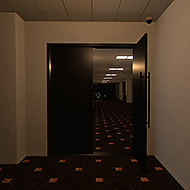
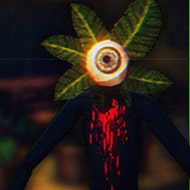









In Anomalous Coffee Machine 2 you start with nothing but a blinking cursor, a vending machine that shouldn’t work the way it does, and a girl across the counter who never explains why she’s there — and that absence of instruction matters more than it seems, because the entire game runs on the assumption that you’ll type something before you understand what typing does.
The Coffee Machine as the Only Rulebook You Get
There’s no tutorial screen, no objective marker, no health bar. The Anomalous Coffee Machine itself is the interface: you type a word, a cup appears holding whatever the machine decided that word tastes like, and then you choose who drinks it, the girl or yourself. Type something ordinary like “coffee” and you get exactly that. Type something like “fear” or “memory” and the drink starts carrying descriptions that don’t behave like flavor text at all.
Community vocabulary has settled on calling this process “brewing,” as in “what did you brew for the fear cup,” which tells you a lot about how players actually talk about progress here — not in levels or scores, but in which words produced the strangest reaction. Beginners tend to make the mistake of typing safe, literal nouns for the first ten minutes, and the game rewards that patience with almost nothing memorable in return.
Once you branch into abstract concepts — nothingness, faith, death — the machine starts responding less like a novelty and more like it’s paying attention to you specifically. That shift, once players notice it, is usually the moment Anomalous Coffee Machine 2 stops feeling like a curiosity and starts feeling like something worth being careful with.
Choosing Who Drinks and Why It Isn’t a Neutral Choice
Every cup comes with a decision: hand it to the girl behind the counter, or drink it yourself. This is the one section of the game built around a meaningful branching choice — feeding the girl a cup changes her mood and occasionally her appearance for the rest of the session, while drinking it yourself changes how you perceive the space around the machine, sometimes for several exchanges afterward. Neither option is clearly “safer,” which is part of what keeps players hesitating over words they’d otherwise type without thinking.
Players chasing every possible outcome tend to alternate deliberately, feeding the girl anything emotional while drinking anything abstract themselves, just to see whether the split changes what the machine’s operator, sometimes referred to in the community as Horu, seems to notice. Players who prefer a slower, narrative-first pace tend to stick to one pattern for a long stretch, letting the story build its own internal logic before experimenting further.
By the time you’ve typed twenty or thirty words, the girl’s reactions stop feeling randomly generated and start feeling like they’re tracking something about your choices specifically, which is exactly the kind of discovery the game never states outright but clearly wants you to notice on your own.
Why the Game Refuses to Tell You What You’re Doing
Anomalous Coffee Machine 2 doesn’t have an ending in the traditional sense, and that’s one of the most divisive things about it. Some players find the total absence of closure frustrating after investing real time hunting for every keyword the machine recognizes. Others argue that the lack of resolution is the entire point, since the game markets itself around curiosity and consequence rather than completion.
What keeps a portion of the community typing anyway is the hunt for the full keyword list, since the machine’s responses aren’t random — they’re built around specific triggers, and finding an unlisted word that produces a new reaction still counts as a genuine discovery months after release.
Is there a wrong word to type in Anomalous Coffee Machine 2?
Not exactly, though certain words push the girl’s reactions and the environment further than others, and some of the darker keywords trigger the disturbing imagery the game warns players about before they ever reach the machine.
Do choices carry over between sessions?
The game tracks reactions within a single sitting rather than across separate playthroughs, so experimenting freely in one session won’t lock you out of trying a different pattern the next time you sit down with the machine.
How is this different from the first Anomalous Coffee Machine?
The original game introduced the basic typing mechanic with a narrower set of words and reactions, while this sequel expands the keyword list considerably and adds the choice of who drinks each cup, giving the interaction a weight the first game never had.
There’s no manual waiting at the end of Anomalous Coffee Machine 2 to explain what the girl was, what Horu wanted, or why “void” tastes like nothing — and that refusal to resolve itself is exactly why players keep coming back to type one more word into the machine.