























Dirt Clicker



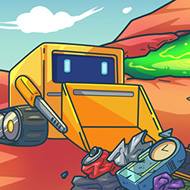









Dirt Clicker looks like a joke about shoveling soil but plays like a patient puzzle box buried under an idle loop. The first minutes are nothing but clicks with a spoon, yet the ground keeps offering puzzle pieces, badges and relics that hint at a much bigger mystery waiting deeper down. It is a game that quietly asks two things of you: build a digging machine that runs by itself, and pay close attention to what that machine pulls out of the ground.
| Type | Incremental / idle digger |
| Core loop | Dig, sell treasure, upgrade, automate |
| Helpers | Mushroom Buddies, Dirt Golems, Druids |
| Extras | Spells, skill tree, dice minigame, chest puzzles |
What an Opening Session of Dirt Clicker Teaches You
Early on, every click with the spoon matters because nothing else is digging. You sell whatever pops out of the soil, and the first shop visits feel huge: a slightly better tool, then a Mushroom Buddy that chips away at the layer while your hand rests. That handoff from manual effort to passive income is the core of the game, and it happens early enough that nobody gets bored before seeing it.
What surprises newcomers is how quickly the dirt turns into a collection hunt. Treasures stack up in a catalog, puzzle pieces appear without much explanation, and a relic will occasionally surface that obviously is not meant to be sold. The game never stops to explain these, which is either charming or frustrating depending on your patience.
Casual players who like leaving a clicker running in the background will settle in comfortably here. The crew keeps working, the coins keep coming, and each return to the screen usually means a new upgrade is ready to buy.
Three Upgrade Paths That Pull Against Each Other
Tool strength. Upgrading from the spoon makes active clicking hit harder and helps early layers go faster. It is the most satisfying upgrade to feel, but over-investing leaves you dependent on your own mouse, which does nothing while you are away.
Worker count and power. More Dirt Golems and Druids mean more passive dirt, but a large crew of weak helpers is a trap. The skill tree nodes that strengthen workers often do more than another hire, and the stats screen makes the slackers easy to spot.
Loot luck. Better drop odds sound boring until you notice how much faster valuable finds pay for everything else. Min-maxers usually settle into a rotation, buying a tool tier, strengthening the crew, then grabbing a loot node before the next layer gets tougher.
Reading the Relics Before Touching a Chest
The chest system is where Dirt Clicker splits its audience. Chests demand a color sequence entered on the chest itself, and the only honest way to learn the codes is through key relics that reveal a combination after you look at them for a few seconds. It is clever, but plenty of players reached the end of the demo with several chests still sealed and posted confused threads about it.
A few habits make the whole thing far less painful:
- Hover on each new key relic and wait, since the colors do not show instantly.
- Write the combination down with the chest type it belongs to.
- Watch relics that slowly reveal red letters and record each letter in its exact position.
- Turn on the shape overlay in options if the colors are hard to tell apart.
- Use the hint button when you are truly stuck rather than brute-forcing sequences.
Puzzle-minded players tend to call this the highlight, since it gives the digging a purpose beyond bigger numbers. Still, the criticism is fair: a relaxing clicker suddenly asking for notes on a scrap of paper catches a lot of people off guard.
Automation, Spells and the Long Dig in Dirt Clicker
By the time Druids join the crew, your role shifts almost entirely to planning. Workers handle the digging, and you decide which skill tree branch to grow and when to trigger spells. Some spells are strong enough to blow through a layer in moments, so experienced diggers save them for the harder dirt deeper down rather than casting them the second they recharge.
The dice minigame offers a short break from the upgrade grind.
Badge hunters face one awkward goal: 10,000 dirt dug using spoons only. Helpers arrive so early that most players blow past the chance on a first run, and the upcoming prestige system is the likely second shot for anyone who wants a clean badge wall.
Common Digger Questions
- Is Dirt Clicker more idle or more active? It starts active, since the spoon needs your clicks, but shifts toward idle once Mushroom Buddies and Dirt Golems take over. After that, your job is mostly choosing upgrades and timing spells. Players who enjoy clicking can still keep a strong tool for bonus speed.
- Why won’t my chest open even after trying all the colors? Chests need the exact color order from the matching key relic, not just the right colors. Look at the key relic for a few seconds to reveal its combination and note which chest type it belongs to. The hint button and colorblind shapes help if the sequence is hard to read.
- Is it worth fully clearing every layer? It is worth it when a layer still hides puzzle pieces, relics or items missing from your catalog of 40+ treasures. If your collection is complete for that depth, moving down gets you tougher dirt and better loot faster. A balanced approach is to clear layers where secrets remain and skip the rest.
Dirt Clicker earns its hours by hiding a real mystery underneath a simple spoon-and-soil loop. Build a crew of Mushroom Buddies and Dirt Golems that digs without you, keep the loot luck upgrades coming, and take the key relics seriously, because the sealed chests are where the dig turns from idle routine into something you actually want to solve.