











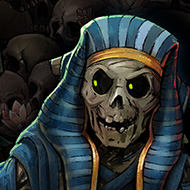
Unlucky Mummy




The sarcophagus in Unlucky Mummy has a 75 percent chance of erasing every relic you have found this run the instant you press Space one time too many. That single number defines the entire experience: a clicker built on real risk, wrapped in Egyptology and quantum-physics narration that never lets you forget how badly the odds are stacked against you.
| Genre | Narrative Incremental Clicker |
| Platform | Browser |
Opening the Sarcophagus in Unlucky Mummy
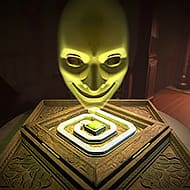
Every attempt in Unlucky Mummy starts the same way: press Space, and the sarcophagus has a base 25 percent chance of yielding one of twelve relics, against a 75 percent chance of failure that wipes your current run’s progress entirely. Success streaks build a combo multiplier, which makes each successive find slightly more valuable right up until the moment a failure erases the whole streak.
Beginners tend to keep pushing well past the point where the math says they should bank their progress. The tension between greed and caution is the entire early game here, and losing a ten-relic streak to one bad roll is a rite of passage almost every player goes through.
Golden Scarabs and Permanent Upgrades
Golden scarabs, earned from successful opens, buy permanent upgrades that raise your success chance, speed up each attempt, and increase base rewards. None of these upgrades change the fundamental math dramatically on their own — one widely discussed upgrade costs 250,000 scarabs and still feels underwhelming to many players, a criticism the developers have heard repeatedly in reviews.
What beginners get wrong is expecting scarab upgrades to make the sarcophagus safe. They make failure less frequent, not impossible, and the game is explicit about that distinction through its narration.
Twelve in a Row: The Resurrection Goal
Chaining twelve consecutive successful relic finds resurrects the mummy and triggers one of the game’s endings. From a completely cold start, the odds of doing that are roughly one in sixteen million seven hundred seventy-seven thousand two hundred sixteen — a number the game does not hide from you, because the whole point is confronting how absurd that streak requirement actually is.
The demo version caps success chance at 50 percent, bringing the odds down to roughly one in four thousand ninety-six, which is still brutal but far more achievable than the full game’s cold-start numbers.
Glyphs and What Carries Between Runs
Glyphs, earned by finishing runs rather than by chaining twelve relics specifically, unlock a form of new game plus that carries meaningful progress forward. This is the system that keeps Unlucky Mummy from feeling completely punishing — even a run that ends after three relics contributes something permanent toward the next attempt.
Act 1 covers the earlier demo content players first encountered, while Act 2 continues the story in the full release, ultimately building toward six unique endings tied to different combinations of Glyphs and relic discoveries.
The Real Curse Behind the Name
Unlucky Mummy borrows its name directly from a real artifact held at the British Museum, a roughly three-thousand-year-old mummy-board tied to a persistent, thoroughly debunked curse legend. That legend even got wrongly linked to the sinking of the Titanic at one point, and journalist Bertram Fletcher Robinson’s writing on the artifact helped cement its reputation, with later comparisons drawn to the more famous Tutankhamun curse stories.
The game’s narrator leans into this real history alongside quantum-physics framing, describing the relics inside the sarcophagus as existing in superposition — both found and not found — until you commit to opening it. It is an unusually thoughtful narrative hook for a genre that rarely bothers explaining itself.
Why Some Players Call the RNG a Scam
The developers have been vocal about defending true randomness in Unlucky Mummy, with no hidden pity mechanic softening bad luck behind the scenes. Community discussion frequently revolves around exactly this point: some players respect the commitment to real odds, while others find runs of seven, ten, or even twenty consecutive failures — mathematically plausible even at buffed success rates — feel more broken than fair.
That divide, between honest randomness and how punishing it feels in the moment, is the single most debated aspect of the whole game.
Is Unlucky Mummy Worth the Grind
The demo represents only a small slice of the full experience, which has left some players wanting fuller access before committing rather than judging the game on a short sample. Even so, the atmosphere, voice-acted narration, and pixel art carry the loop further than a typical clicker premise usually manages.
Unlucky Mummy never pretends the odds are on your side, and that honesty is exactly why the twelfth consecutive relic, whenever it finally happens, feels like an actual accomplishment instead of a scripted reward.