










Miller’s Fantasy: PARTY
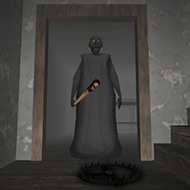




In Miller’s Fantasy: PARTY you start with a body that barely obeys you — legs that won’t hold weight properly, a head still swimming from whatever put you under, and no idea how long you were out. That condition matters for everything that follows, because John Maracheck spends the opening stretch relearning how to walk before he can even think about finding his wife and daughter.
| Genre | Isometric Sci-Fi Horror Adventure |
| Platform | Browser |
| Core Loop | Explore, combine items, and read environmental clues to survive a dying ship |
| Perspective | Fixed isometric |
Waking Aboard the Groomlake in Miller’s Fantasy: PARTY
John Maracheck comes out of stasis alone, in pain, and with no clean explanation for why the ship around him is empty. He was traveling aboard the Groomlake with his wife Eleanor and daughter Grace, and neither of them is anywhere near the pod he wakes up in. The ship itself is losing its fight with orbit, drifting steadily toward Neptune’s methane clouds, which gives every scene a quiet countdown even when nothing on screen is chasing you.
There’s no combat tutorial and no weapon handed to you in the first few minutes, because Miller’s Fantasy: PARTY isn’t built around fighting back. It’s built around figuring out what happened to the crew, one terminal login and one mangled body at a time, while John’s own condition — his pain, his limited mobility, his growing horror at what he’s finding — colors how every room reads. Newer adventure players sometimes expect an early combat or chase sequence to break up the exploration, and when it doesn’t come, the slower puzzle-and-read rhythm can feel unfamiliar until it clicks.
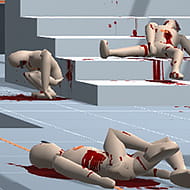
What makes the opening land is how little is explained outright. You’re not told what happened to the crew — you infer it from body positioning, scorched walls, and the tone of the last messages left behind, which is a very different kind of horror than something jumping out at you.
An Isometric Eye on a Ship That Hates You
The fixed isometric camera is one of the first things players notice, and it changes how tension builds compared to a first-person horror game. You can see more of a room than John can react to in time, which means danger is often visible before it’s avoidable — a corpse slumped in a corner, a door hanging wrong, a console flickering in a room you haven’t entered yet. That distance from John’s viewpoint doesn’t make things safer; it just changes what kind of dread the game is working with, trading jump-scare proximity for a slow, dawning wrongness in every hand-painted scene.
Every room on the Groomlake is individually detailed rather than reused, and it shows in small touches: personal effects scattered near a bunk, warning labels half-torn from a bulkhead, terminals left mid-message. Point-and-click veterans recognize the genre’s usual toolkit immediately — click to move, click to examine, click to combine — but the isometric framing forces a different kind of scanning than a traditional side-on adventure game, since important details can sit anywhere in a wide scene instead of along a single horizontal plane.
Players who favor slower, exploration-first pacing tend to get the most out of this framing, since rushing through a scene means missing the environmental details that make later terminal entries make sense.
Reading the Dead Through Scattered PDAs
Most of the Groomlake’s story doesn’t come from cutscenes — it comes from PDAs left on corpses throughout the ship, personal logs and internal messages that piece together what the crew did in the hours before everything fell apart. Reading them is optional in the sense that you can walk past a body without stopping, but skipping them means missing most of the reason the ship is in the state it’s in.
This is where Miller’s Fantasy: PARTY earns its reputation among horror-adventure fans specifically, rather than horror fans in general: the scares are almost entirely earned through implication and discovered text rather than staged encounters. A PDA log describing a crew member’s last hours can land harder than any monster reveal, because by the time you find it, you’ve already seen the aftermath in the room around you.
Completionist players tend to comb every corner for these logs before moving on, while players chasing the main thread of Eleanor and Grace’s fate will grab the obvious ones and keep moving — both approaches work, but the completionist route fills in far more of the ship’s backstory.
Puzzles That Punish Guesswork and Curiosity
The puzzles in Miller’s Fantasy: PARTY lean on classic point-and-click logic — combine an item from your inventory with something in the environment, or use it directly on a terminal or mechanism — but the game doesn’t soften the consequences of getting curious in the wrong spot. John can die in genuinely brutal ways if you use certain objects on him or interact with the wrong hazard at the wrong moment, and the game doesn’t flinch from showing it.
That willingness to kill the player character for poor choices is one of the more divisive things regulars bring up. Some love it as a sign the world takes itself seriously; others find the graphic deaths mismatched with an otherwise slow, deliberate pace.
The following list covers the basic puzzle interactions that carry through most of the ship:
- Combining two inventory items to create a new tool
- Using an item directly on a fixed object or hazard in the environment
- Logging into terminals to unlock doors, records, or new areas
- Reading PDA logs for context that later puzzles assume you already have
None of these mechanics are unusual for the genre alone, but stacking them against John’s constant pain and the ship’s slow tilt toward Neptune gives even a simple combine-and-use puzzle real weight.
Why Miller’s Fantasy: PARTY Still Divides Horror Fans
Reception among horror-adventure players sits solidly positive — roughly four out of five players who reviewed it rate the atmosphere and tension highly, putting it in the same conversation as other slow-burn sci-fi horror adventures built around isolation rather than monsters. The comparisons players reach for most are ship-set horror stories where the threat is as much the environment and the unknown as anything actively hunting you.
The pacing is the sticking point for some. Players used to horror games with regular jump scares or chase sequences sometimes find the terminal-reading, item-combining rhythm slow going, especially in the middle stretch before the plot around Eleanor and Grace tightens up. That’s a fair criticism rather than a flaw to wave away — this is a game that asks you to sit with dread rather than run from it, and not every horror fan wants that pace.
What keeps people talking about it years later, though, is how personal John’s search feels by the end. It stops being about surviving the Groomlake and becomes about what he’s willing to accept about his family, which is a heavier note than most horror adventures land on.
- Do you fight anything in Miller’s Fantasy: PARTY? No — there’s no combat system. John survives by avoiding hazards, solving environmental puzzles, and paying attention to what a room is telling him, and the tension comes from that vulnerability rather than from weapons or enemies to fight back against.
- Can John Maracheck actually die in Miller’s Fantasy: PARTY? Yes, in specific and often graphic ways if you use the wrong item on him or trigger certain hazards — the game doesn’t pull punches on this, and it’s one of the more talked-about aspects among players who went in expecting a gentler point-and-click experience.
- What happened to Eleanor and Grace in Miller’s Fantasy: PARTY? Their fate is the central mystery John is chasing through PDA logs, terminal records, and physical evidence scattered across the Groomlake, and the game deliberately withholds the full picture until you’ve pieced together most of what happened to the rest of the crew first.
Miller’s Fantasy: PARTY isn’t interested in easy scares. It’s a game about a man dragging himself through a dying ship one painful step at a time, piecing together what happened to Eleanor and Grace through logs, terminals, and rooms that were clearly once someone’s whole life — and by the time the Groomlake finishes its slow fall toward Neptune, that quiet, sustained dread is exactly what stays with you.