














Re:Metamorphosis Candina
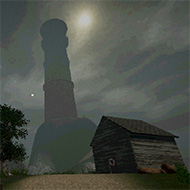

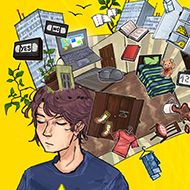
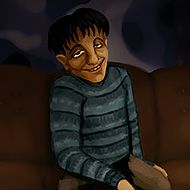


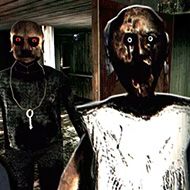

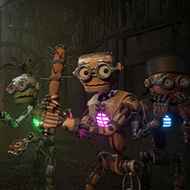

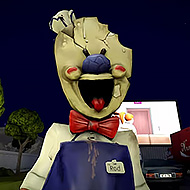

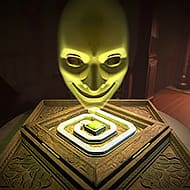
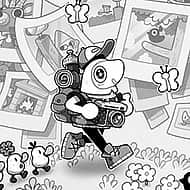
Re:Metamorphosis Candina looks like a moody travel journal with some spooky set dressing, but it plays like a slow accumulation of wrongness that never lets you feel safe long enough to enjoy the scenery.
The Uneasy Setup Behind Re:Metamorphosis Candina
Re:Metamorphosis Candina drops you into a journey already going wrong, without spending much time explaining why. That restraint is deliberate — dark travel-horror games in this vein let atmosphere carry the exposition instead of dialogue.
The premise reads plainly: something has gone wrong with the trip you’re on, and continuing forward is the only option given. There’s no tutorial layer easing you in, so the first minutes ask for patience.
Players expecting a fast-paced horror game should recalibrate early, since the tone leans toward creeping unease rather than jump-driven set pieces.
What the Curse Actually Feels Like to Play Through
The word cursed in the framing isn’t just flavor text — it shapes the pacing, with small wrongness accumulating rather than one dramatic reveal changing everything at once.
That slow-burn structure is common to the genre, and Re:Metamorphosis Candina sticks close to it: environments that look almost normal until a detail is slightly off.
It’s a quieter kind of horror than a chase sequence, and whether that lands depends on how much attention a player gives a scene that isn’t obviously threatening yet.
Exploration Pacing in Re:Metamorphosis Candina
Movement through the game’s spaces is deliberate rather than rushed — there’s rarely a reason to sprint through an area you haven’t fully looked at.
In the opening stretch, exploration stays fairly linear. Once the pace picks up, side paths start appearing, rewarding players who double back over ones who beeline for the next objective.
How long any of this takes to finish isn’t pinned down with precision in what’s publicly documented, so it’s fairer to describe the pacing qualitatively than promise a runtime.
Puzzle Design Built Around Dread, Not Difficulty
The puzzles aren’t built to be mechanically hard so much as unsettling to sit with — solving them usually means staying in an uncomfortable space longer than instinct wants.
That’s a genre choice more than a flaw: cursed-journey horror-adventures generally use puzzles as a pacing tool, slowing the player inside the scariest rooms rather than testing reflexes under time pressure.
A few habits carry over well from similar games in this space:
- Treat any environmental detail that feels slightly wrong as a clue, not scenery
- Expect solutions to require patience over quick reflexes
- Don’t assume every room has an immediate exit
Sound and Silence as Warning Signs
Ambient sound design tends to do more work than dialogue in games like this, and that appears to hold true here — silence, or an absent expected sound, functions as its own warning.
It’s a detail only really noticeable from playing rather than reading about it: a room that should have background noise and doesn’t is more unsettling than one filled with obvious cues.
Whether that restraint reads as effective or underwhelming is one of the more debated points among players of this style of horror-adventure.
How the Tension Builds the Further You Travel
By the time the game has introduced its core wrongness and let a player sit with it, the tension stops being about individual scares and starts being cumulative.
That escalation is common to the genre and appears to be the intended shape here too, rather than isolated scary moments strung together.
Whether the game has multiple distinct endings or one fixed outcome isn’t clearly documented anywhere reliable, so that detail remains genuinely uncertain.
What Players Tend to Disagree About
The biggest disagreement around this kind of slow-burn horror-adventure is almost always pacing — some find the unhurried movement essential to the mood, others find it drags.
There’s also debate over how scary a game like this is compared to more overt horror titles, since it leans on dread rather than jump scares.
A few questions help gauge if the tone fits:
- Do you enjoy horror that builds slowly instead of relying on sudden scares?
- Are you comfortable with exploration-heavy pacing that doesn’t explain itself right away?
- Would you rather sit with an unsettling scene than rush past it?
Re:Metamorphosis Candina isn’t the kind of horror-adventure that hands you clear answers, and that’s the point — it trusts a wrong-feeling hallway and a room that’s too quiet to do the job louder scares usually handle elsewhere.